Peace Corps Evacuation

Hello everyone, 

This week has been non-stop because all Peace Corps countries are being evacuated due to the COVID-19 pandemic. It looks like my Peace Corps service is coming to an abrupt end. Early Monday (3.16.20) morning, we got an email from our Country Director that Peace Corps Washington DC is ordering that all countries must evacuate their volunteers. As I am writing this concluding entry, I want to ensure you that I am safe in Washington D.C. and will be on a flight to Chicago tomorrow morning.  

Though they evacuated three countries in West Africa in 2014 because of Ebola, this is the first time in program history when everyone is being evacuated. Some countries were already in the process of evacuation before it came from Peace Corps Washington, but now it’s mandatory. 

The straw that broke the camel’s back was South Africa closing its borders. South Africa is where all volunteers in the continent would get sent to in medical emergencies. Since their borders are closed, we would have nowhere to go in case of an emergency, thus putting us in more danger. Out of the 7,000 volunteers serving world wide, 46% of us are in Africa. 

Rwanda also had its first confirmed case four days ago, on March 13, but it will spread very quickly despite the proactive measures the government has installed. From a public health perspective, COVID-19 will spread incredibly quickly in Rwanda because it’s the size of Rhode Island and has over 12 million people, making it the most densely populated country in Africa. The government understands this threat and has, quite literally, shut everything down within 24 hrs. All social gatherings were discouraged – no weddings, church, funerals, concerts, and schools were closed. Stores, restaurants, and markets have hand-washing stations in front of their entrances and a security guard who ensured that everyone used it. This all happened within 24 hrs of Rwanda confirming its first case. 

It’s quite shocking how differently the Rwandan people have been acting since the first confirmed case. Before March 13, everyone was very relaxed about COVID-19, but once we had our first confirmed case, everyone started to take it more seriously and began treating me differently.

To them, I am Chinese, while my American identity is secondary and my Korean one is invisible. The amount of staring, COVID-19 comments, and racism has skyrocketed. But it’s not only Asians, any “umuzungu” or foreigner is being accused of having the virus and spreading it. My friend, who is a white, blond haired, and  blue eyed male had an entire row on the bus to himself because nobody wanted to sit next to him. Any other time, people approach him and want to be his friend because he’s an American, but now people avoid him. 
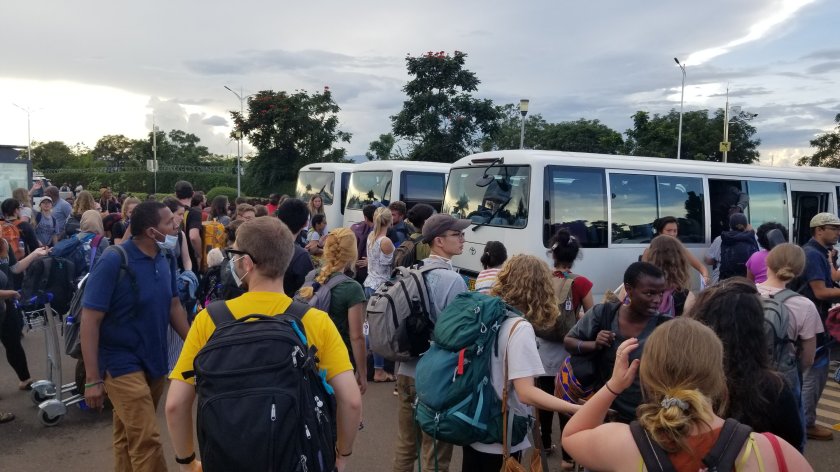
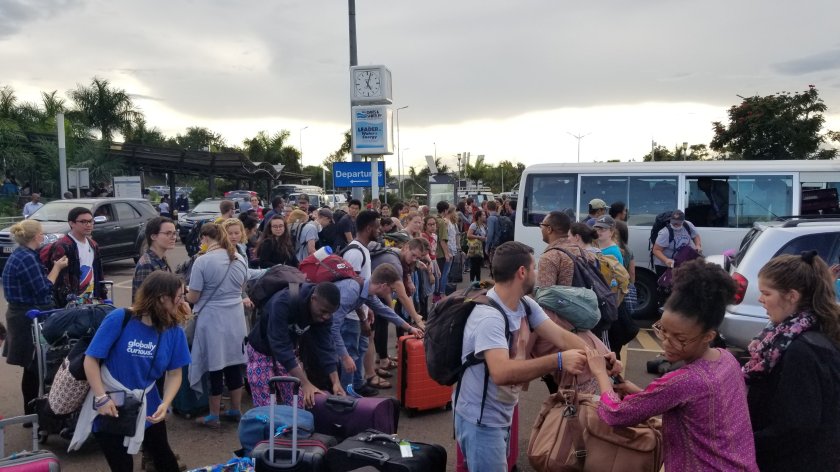
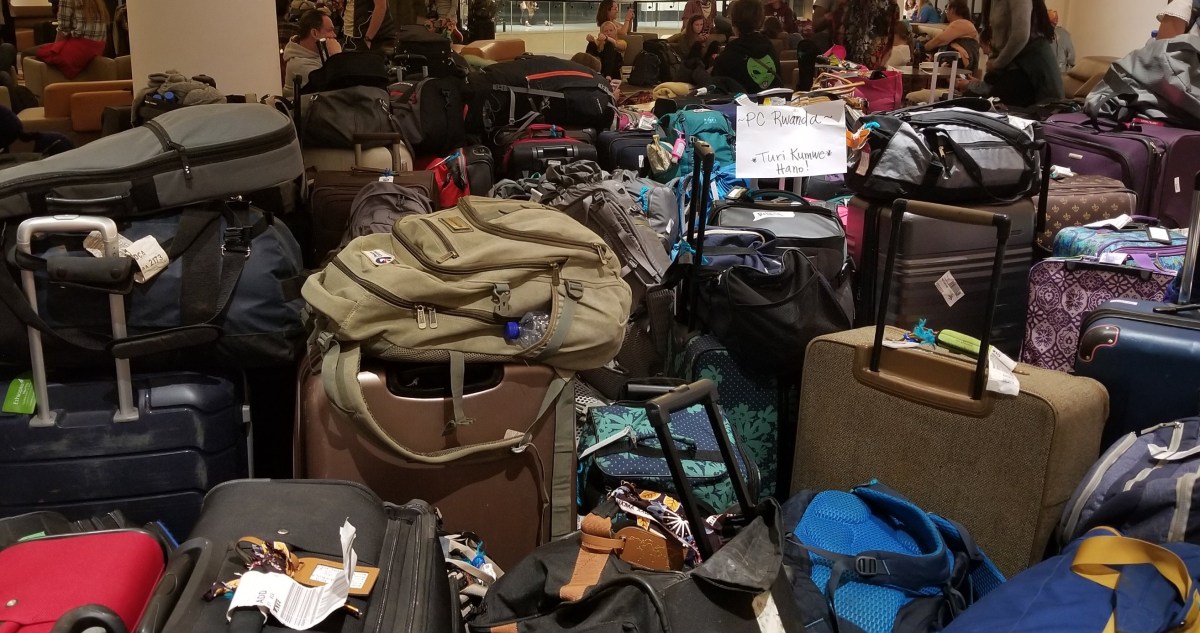
Unloading all of our luggage in the Kigali airport parking lot.
More unloading.
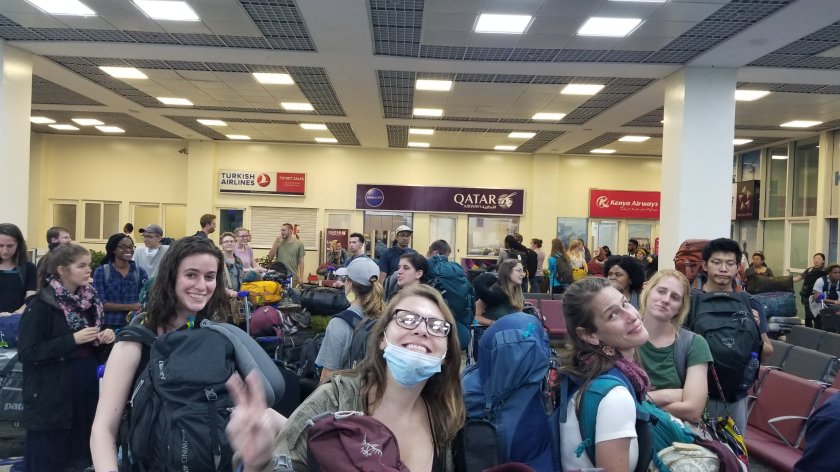
Me and my friends waiting in line at the Kigali Airport.
Left to right: Dani, Bri, Austin, Robyn, Darren.

Evacuation happened so quickly. 

There are 700 volunteers in Peace Corps Africa who needed to get home, which became increasingly more and more challenging as borders were closing and flights became more limited. As the situation became more dire, commercial flights were no longer an option and Peace Corps chartered flights for us. 
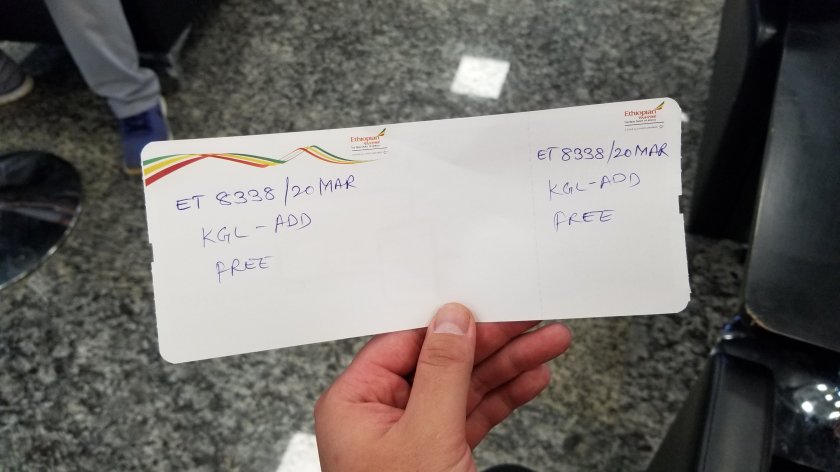
I thought this was hilarious. This is our ticket from Kigali to Ethiopia on our chartered flight.
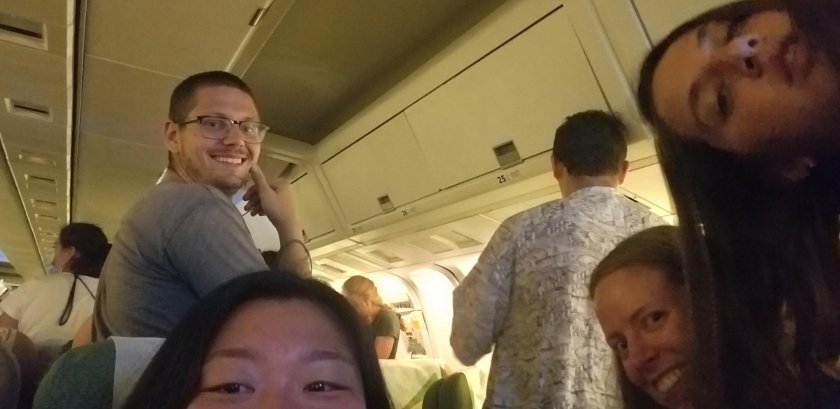
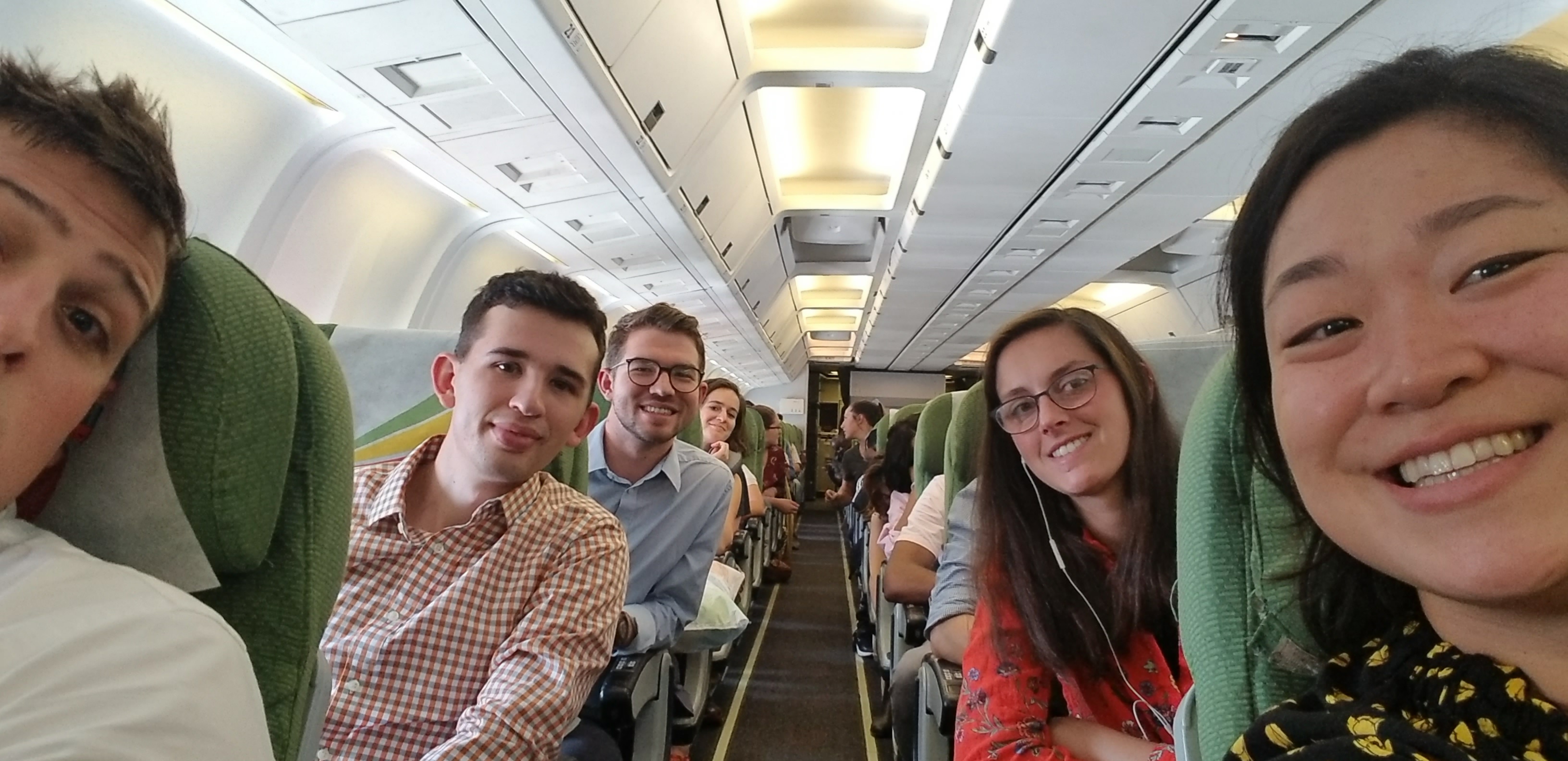
Our chartered flight did not obey regular airplane rules. It was half empty and filled with only PC Volunteers, so we walked around the cabin, drank duty-free wine, and had fun.
Left to right: Garret, me, Erin, Brooke.
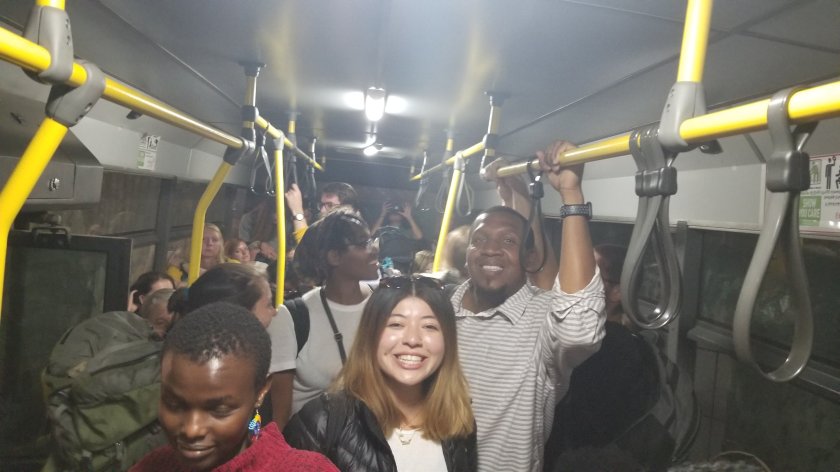
On the bus from our hotel in Ethiopia to the Airport.
Left to right: Clem, Sierra, Leia, Jerrion.

PC Rwanda was evacuated Friday night with a chartered plane, merely hours before the country shut its borders. We were “picked up” by PC Uganda, and together we went to get PC Malawi before going to Ethiopia. Addis Ababa was the meeting point for all of Peace Corps Africa to be evacuated to America. We arrived at ~5am and were on another chartered flight with PC Ethiopia, Zambia, Mozambique, Cameroon, Malawi, and Madagascar at 1a the next day/night. I have to say, it was fun meeting the other volunteers and exchanging stories about our countries. I wish It had been under different circumstances, but as we say in Rwanda, “bibaho” or “it happens.” 

The evacuation has been a very stressful time for everyone. We’d get emails notifying us if we’d be on a flight that day, be on standby, or wait another day to be evacuated. We were always on our toes, ready to move, and so caught up with the entire evacuation process that it never occurred to us that these would be our last moments together. With everything that’s been going on, it didn’t even occur to me that I’d have to say goodbye to everyone. My friends and I enjoyed one, final night together in DC before we all fly out to our respective homes in the morning. It’s sad that this is how our stories end.

With that, it looks like my Peace Corps service has come to its final moments. Thank you all for joining me on this adventure; it was a pleasure to share it with you. 

Evacuation Timeline
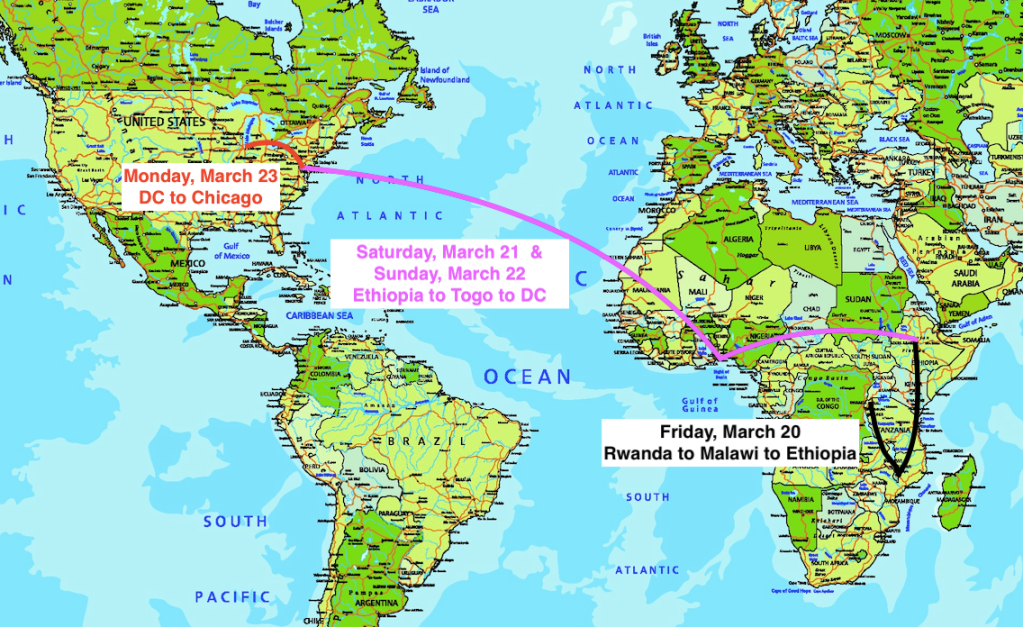
Monday  – Email from our Country Director that we will be evacuating

Thursday – Left site 

Friday – Flight from Rwanda to Malawi to Ethiopia 

Saturday – Flight to DC from Ethiopia, refueled in Togo

Sunday – Arrival in DC

Monday – Fly home to Chicago 
How the Coronavirus is Affecting Peace Corps

The coronavirus is making headlines. We have been getting a lot of email updates from our Country Director (CD) about potential action plans regarding the outbreak and if it gets too close to Rwanda. Peace Corps volunteers and staff are given a travel ban to specific countries to reduce the risk of contraction, while some countries are given more severe measures.

Peace Corps Volunteers in China and Mongolia have been evacuated. These countries have been recalled, but will be resumed once the outbreak is contained. A similar protocol occurred when Ebola was at its peak in West Africa circa 2014. A a total of 340 Volunteers from Liberia, Sierra Leone, and Guinea were sent home. If the coronavirus comes to Africa and threatens volunteers, a similar protocol will take place. As of February 25, there have been two confirmed cases in Northern Africa.

One of my fellow volunteers pointed out that it’s easier to confirm cases in developed countries, and much more difficult to do so in underdeveloped ones. There are likely more cases in Africa that haven’t been confirmed.

The benefit of the Ebola crisis is that many African countries have been diligently screening travelers upon arrival. So, there’s already a process in place to counteract the coronavirus and Rwanda is no exception. In fact, WHO even commended Rwanda’s preemptive measures against Ebola. Rwanda borders the D.R. Congo and Uganda, both of which have multiple confirmed Ebola cases. Despite its proximity, Peace Corps Rwanda is still operating because of the preventive measures and hopefully it will continue to do so even as the coronaviruses creeps closer.

That’s all I know for right now, but our email updates from our CD keep on coming.

My First Two Weeks at Site and X-mas

Time is a strange thing. It’s been only 14 days at site, but it feels like it’s been both forever and only a few days.

I will say, however, I feel like I’m slowly becoming more accustomed and adjusted to life here, despite my multiple “power crying” sessions and breakdowns. Between site installation and now, I thought about going home, convincing myself that I signed up to do something that I wasn’t capable of. I seriously thought about it, but I have stubbornness issues so it’ll have to take a lot more than just feeling uncomfortable for me to go home. On the bright side, things could only go up, and up they have gone.

I talked to a carpenter earlier last week about getting a couch, tables, shelves, and a bed frame made! Not having furniture and essentially living on the floor is incredibly humbling. I’m over exaggerating, the health center is letting me borrow one chair while I wait for furniture, but I have to move it from room to room if I want to sit! I’m absolutely looking forward to the day when I can come “home” and it feels like home. Little by little, I’m getting the things that make a home – plates, a carpet, a broom – and getting more comfortable exploring my local market where I can get fruits, vegetables, toilet paper (we all need it), and everything in between. The best part is that the mammas at the market are always so happy to see me! It honestly makes my day when my mammas ask me how I’m doing or throw in an extra mango when I buy produce from them. It’s in these small, seemingly insignificant, relationships where I find the most encouragement to continue being here.


I definitely had to put myself in uncomfortable situations, such as going to the market alone, to become more comfortable where I am. Nothing here will “just happen,” you have to make it happen. I know that sounds cliche and overused, but it’s a cliche for a reason. I truly think I’ve made it this far, even though it’s only been 14 days, because of my friends, my co-workers, and my mammas that continue to make this feel more “do-able” and less overwhelming.


Everything is getting better, it’s a Christmas miracle! I’m half joking, but my friends and I got together to celebrate the holidays and it was so nice to hear that everyone is facing similar challenges – loneliness, unfurnished homes, and feeling overwhelmed, to name a few.

Also, be sure to check out my Rose. Bud. Thorn. page for check-ins!

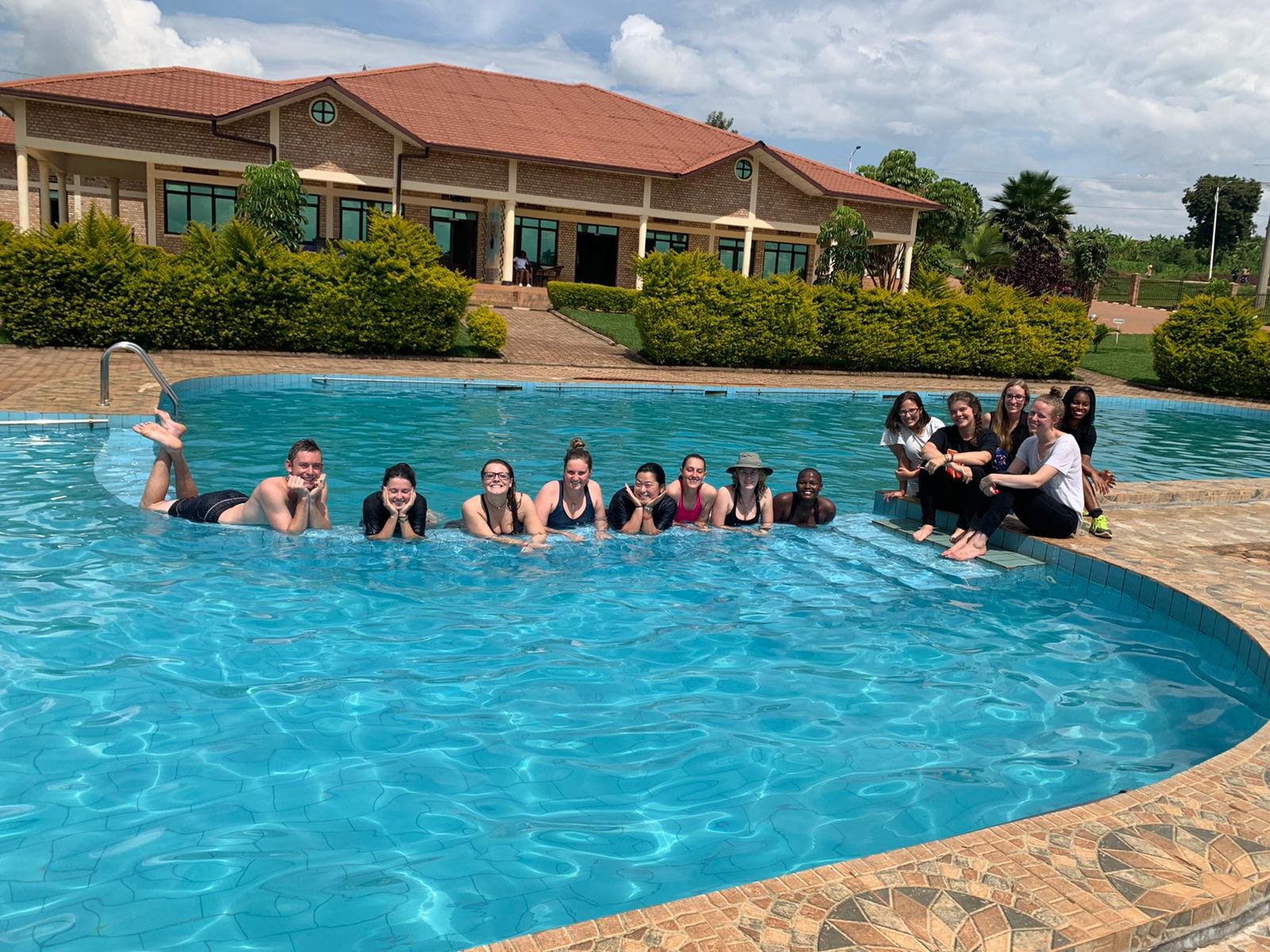
We celebrated our very hot and sunny X-mas poolside!
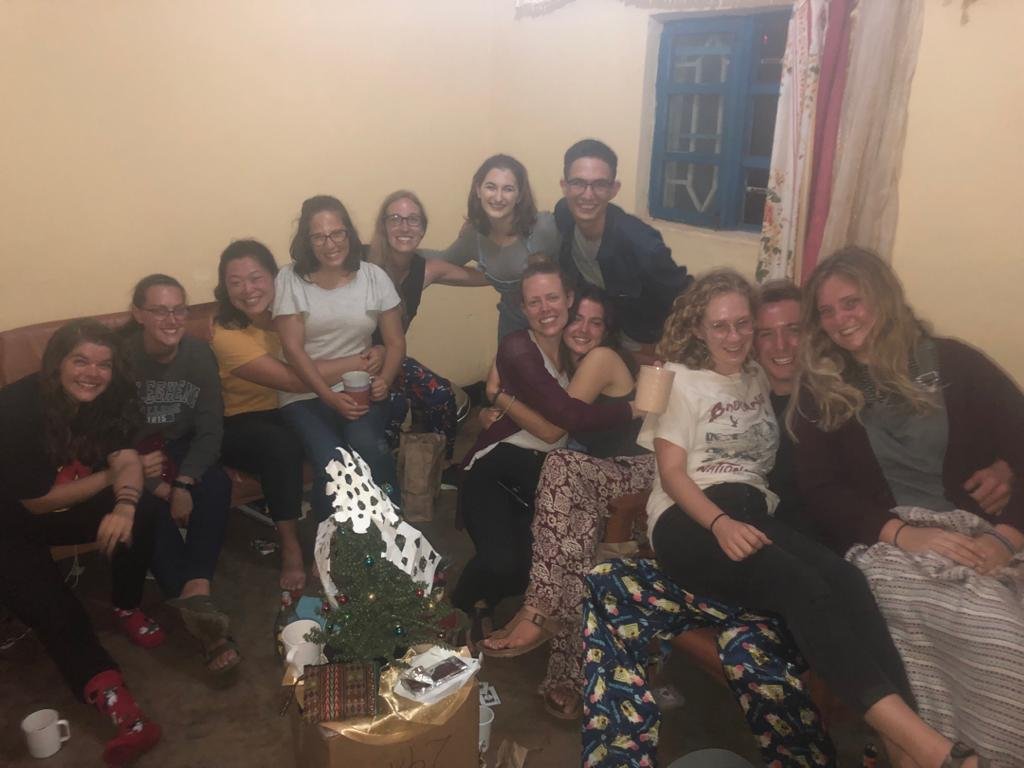
Our X-mas group! Our friend hosted since 1) she inherited furniture from a previous volunteer while a chunk of us are still living on the floor, 2) she has a bigger house, and 3) her mom sent here a small Christmas Tree!

Site Visit

10.19.19-10.25.19 

I spent this past week at my site in the Southern Province! I got to see my Health Center (HC), meet all of the staff, and see where I’ll be living. The main purpose of doing site visit is to become familiarized with where we’ll be working and living before we move in after we offically swear in as Peace Corps Volunteers (PCV). It’s important that we know when and where the markets are, what we can buy there, how to get to and from our site and Kigali, and see our homes so we know what we’ll need to buy to furnish it.  

In all honesty, had my first (and definitely not last) moment of “oh my god, I don’t think I can do this.” It was a rude awakening realizing how insufficient my Kinyarwanda is. I had a difficult time communicating with my Supervisor, Sister Athanasie, the HC staff, the mamma’s and their babies. I was overwhelmed knowing that this is where I’ll be working for the next two years and that I’ll have to lead educational sessions on nutrition, hygiene, and other health topics.

Fun and fast facts.

  1. My HC was established before the genocide, making it one of the oldest in the country. 
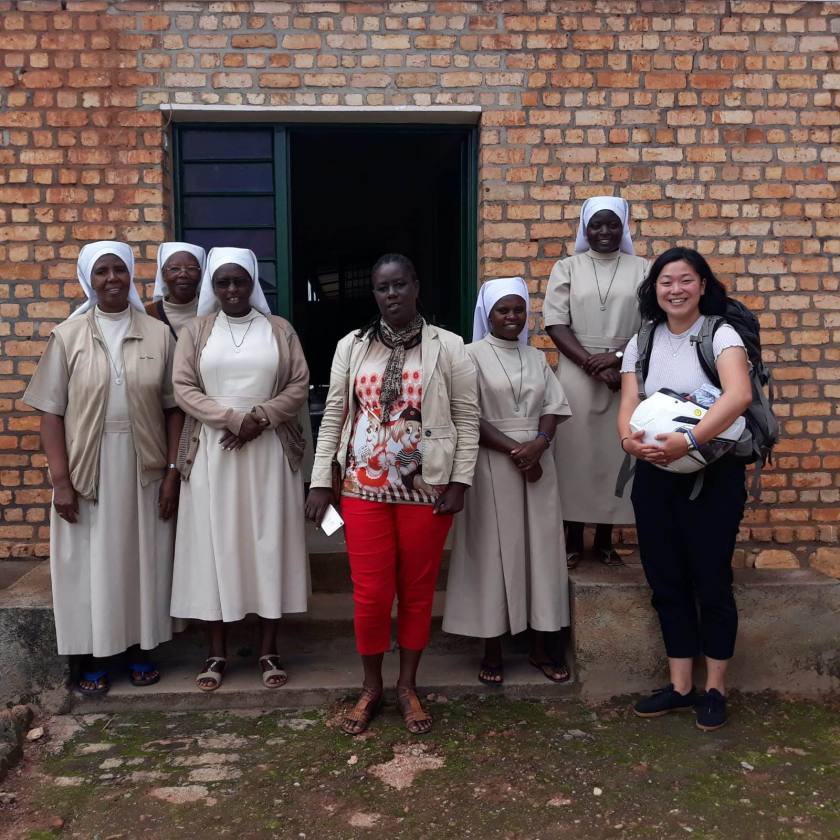
  2. It’s affiliated with the Catholic Church, so my supervisor is a Nun – Sister Athanasie. 
  3. My HC serves 17 villages.

Location. Location. Location. 

I’m only a mile away from one of the bigger cities in the Southern Province, which means restaurants, a good market, stores, etc. At first I was a little bummed that I was in such an urban area, in fact, the volunteer I’m replacing says that my site is probably the closest one to a major city. After thinking about it, I’m quite relieved because it’ll make life a lot easier when I need to furnish my house, go grocery shopping, or want to get some Chinese food and ice cream (YES! There’s a Chinese Restaurant and an ice cream shop in town). I’m definitely excited to host my friends when they visit. 

Here are some pictures from my site. Enjoy!

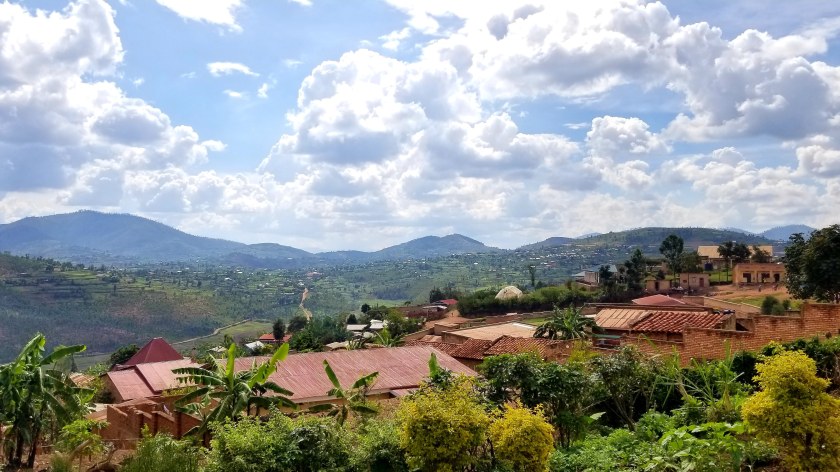
My HC is in the photo – can you spot our green house?
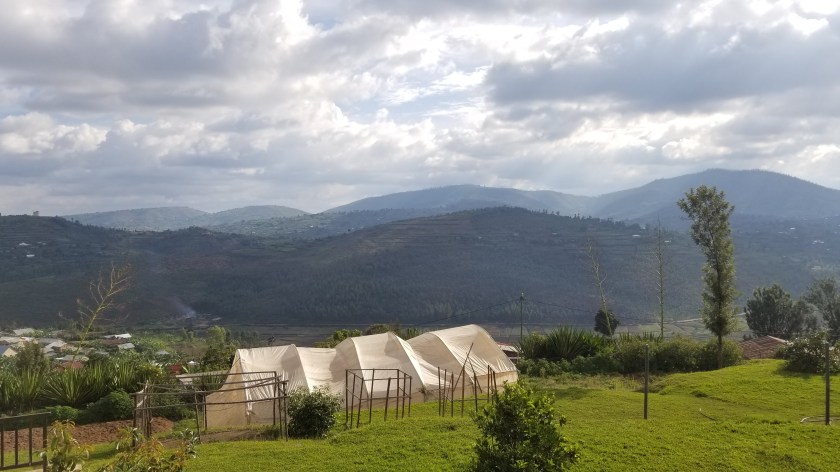
Our greenhouse.
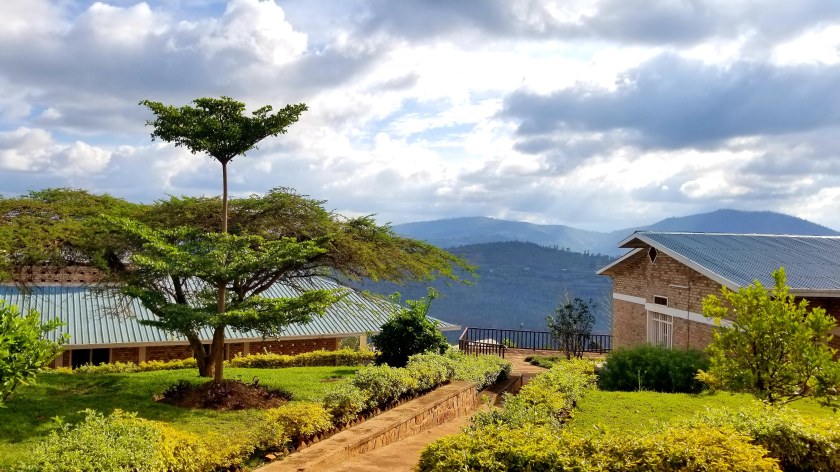
The building on the left is our maternity ward and the right is the laboratory.
Beautiful, right?
The entrance to the HC is on the left and the village center/downtown is on the right.

My House. 

The Peace Corps (PC) and the HC work together to find housing for all of the volunteers. PC’s biggest concern is safety for all us, especially since I’m a woman living alone. They got a house that’s 200 meters away from the HC, is in a compound, and has an indoor bathroom (!!!!). Most homes in Rwanda have latrines, but they can unsafe to use at night so many Rwandans don’t even use them at night. I know my mom was very happy to hear all of this. Houses can vary dramatically across the country – some are very large, some are quite small, some have running water and electricity while others don’t. Mine is roughly the size of a hotel room (~300 square feet), has running water, and electricity. No complaints. 

Work. 

I spent my week working at my HC, getting a small introduction to my two years working there. The HC has a lot of different services/ departments: HIV/AIDS counseling, TB, immunizations, maternity ward, counseling, dentistry, primary care, laboratory testing, and of course maternal and childhood health services, such as nutrition, ante and postnatal care. 

Our Pre-Service Training (PST) has familiarized us with what to expect when working at the HC, but nothing can prepare you for seeing your first acutely malnourished child.

My counterpart, Cecile, is the nutritionist and was teaching me all about the services they offer moms and their children: the milk program, Fortified Blended Foods (FBF), immunizations, growth measurement, counseling sessions and so much more. We spent our week together taking weight, hight, and Mid-Upper Arm Circumference (MUAC) measurements, distributing milk and FBF to expecting mothers and mothers with young children. Our Pre-Service Training (PST) has familiarized us with what to expect when working at the HC, but nothing can prepare you for seeing your first acutely-malnourished child. It’s often not a problem of getting enough food on the table, but having the right foods. When I flipped through the charts, I was stunned to see how many children were marked as “DIED” before their 2nd birthday.  

My First Week

Very happy in Rwanda 🙂

We’re almost at the 2 week mark since arriving in Rwanda!  Time has flown by so quickly because everyday has been packed with meetings, info sessions, Kinyarwanda language lessons, and socializing with the other 72 volunteers. The wonderful thing about this group is the combination of both Health (24 volunteers) and Education (49 volunteers) sectors, in previous years the sectors were trained separately. Before coming to Rwanda, we all met in Washington D.C. to have a brief, but intense orientation, initial introductions, and a reminder on what the Peace Corps is and what our responsibilities are. We all arrived in D.C. by Monday afternoon and we were on our way to the airport the next morning by 5am to officially embark on our journey. 

It was a long day of traveling, a 13 hour flight to Ethiopia, 3 hour layover, and a 2 hour flight to Rwanda. It’s a strange feeling knowing I arrived to the country I’d call home for the next two years.

On the plane to Rwanda!!

From the Kigali airport, we went to a hotel where we spent the next two days meeting the staff, having interviews, meetings, language lessons, and completing a lot of paperwork. It felt like every hour was packed with activities until we left for our training site last Saturday. We drove ~2 hours to Rwamagana in the Eastern Province, our next home for the next three months while we train before being officially inducted as Peace Corps Volunteers. 

While we’re training, we live with host families who help us integrate into the Rwandan culture. They were waiting for us when we got to our training site. We were all anxiously awaiting our names to be called during the matching ceremony and to meet the family we’d call our own for the next three months. As each match was made, a roar of applause and cheers would erupt from everyone. It was pure joy. I remember my name being called and my host mom embracing me as she called me her daughter. 

The entire purpose of living with a host family during our training is to learn the Rwandan culture – how to store food without a refrigerator, work around power outages and water shortages, hand wash laundry, clean the house, cook using a charcoal stove, and honestly just how to cook. There’s so much to learn! The next three months are filled with training sessions and language lessons. Everything in our program is intended to make us the most successful volunteers we can be when we go to our sites in only three months.

Reflecting on the past two weeks, I think they were the most unpredictable and uncertain. When I got to DC, I didn’t know who the other volunteers were, who we’d be meeting in the Kigali airport, what the next two days in Kigali would be like, if we’d get SIM cards, who our host families were, and so much more. In the end, everything was figured out and worrying didn’t help. One of the biggest things I’ve had to embrace was not knowing – not knowing what the plan is, where we were going, how we’re getting there, etc. I’ll figure it out as we go. As an American, we seek psychological comfort in knowing when/where/who/how/why. What would knowing have changed other than just to knowing what the plan is, where we’re going, who we’re meeting etc.? 

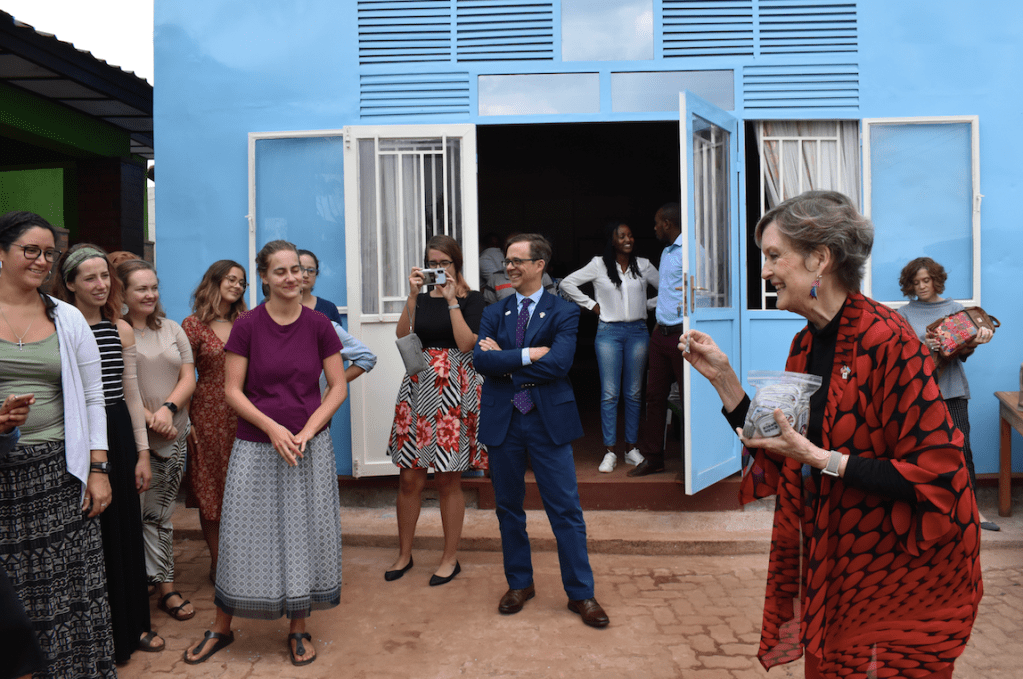
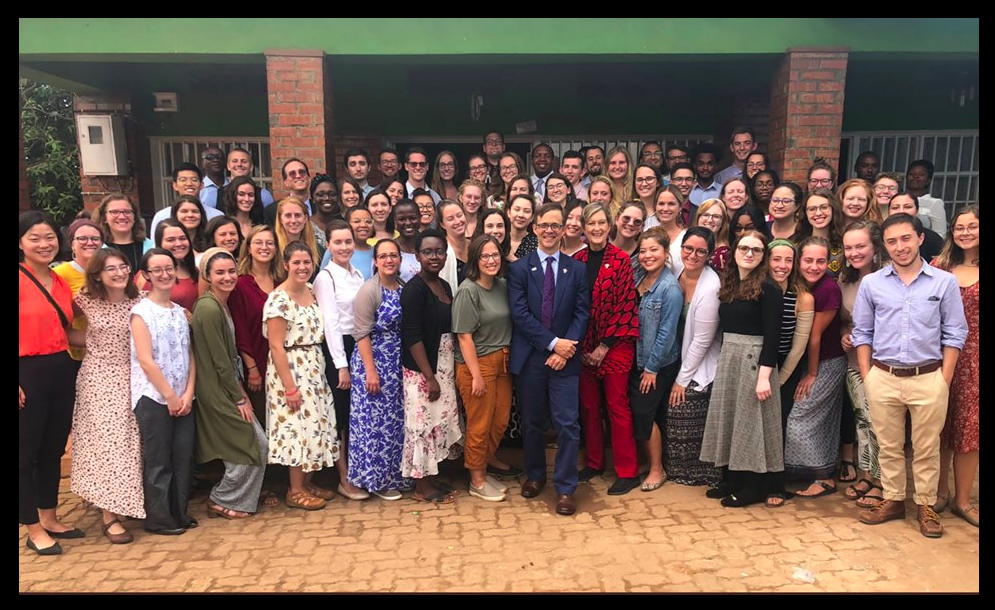
On Wednesday, September 25, we had TWO very special guests. The US Ambassador of Rwanda, Peter Vrooman, AND the Peace Corps Director, Jody Olson, visited us!! Can you believe that? It’s no surprise that Jody’s the director; she spoke eloquently about her experience as a volunteer over 50 years ago and how the skills she cultivated, challenges she overcame, and lessons she learned have continued to help her after her service. 

Vrooman is in the center and Olson is on the right.
Group photo with the Ambassador and the Peace Corps Director. I’m all the way on the left 👀
Design a site like this with WordPress.com
Get started