Peace Corps Evacuation

Hello everyone, 

This week has been non-stop because all Peace Corps countries are being evacuated due to the COVID-19 pandemic. It looks like my Peace Corps service is coming to an abrupt end. Early Monday (3.16.20) morning, we got an email from our Country Director that Peace Corps Washington DC is ordering that all countries must evacuate their volunteers. As I am writing this concluding entry, I want to ensure you that I am safe in Washington D.C. and will be on a flight to Chicago tomorrow morning.  

Though they evacuated three countries in West Africa in 2014 because of Ebola, this is the first time in program history when everyone is being evacuated. Some countries were already in the process of evacuation before it came from Peace Corps Washington, but now it’s mandatory. 

The straw that broke the camel’s back was South Africa closing its borders. South Africa is where all volunteers in the continent would get sent to in medical emergencies. Since their borders are closed, we would have nowhere to go in case of an emergency, thus putting us in more danger. Out of the 7,000 volunteers serving world wide, 46% of us are in Africa. 

Rwanda also had its first confirmed case four days ago, on March 13, but it will spread very quickly despite the proactive measures the government has installed. From a public health perspective, COVID-19 will spread incredibly quickly in Rwanda because it’s the size of Rhode Island and has over 12 million people, making it the most densely populated country in Africa. The government understands this threat and has, quite literally, shut everything down within 24 hrs. All social gatherings were discouraged – no weddings, church, funerals, concerts, and schools were closed. Stores, restaurants, and markets have hand-washing stations in front of their entrances and a security guard who ensured that everyone used it. This all happened within 24 hrs of Rwanda confirming its first case. 

It’s quite shocking how differently the Rwandan people have been acting since the first confirmed case. Before March 13, everyone was very relaxed about COVID-19, but once we had our first confirmed case, everyone started to take it more seriously and began treating me differently.

To them, I am Chinese, while my American identity is secondary and my Korean one is invisible. The amount of staring, COVID-19 comments, and racism has skyrocketed. But it’s not only Asians, any “umuzungu” or foreigner is being accused of having the virus and spreading it. My friend, who is a white, blond haired, and  blue eyed male had an entire row on the bus to himself because nobody wanted to sit next to him. Any other time, people approach him and want to be his friend because he’s an American, but now people avoid him. 
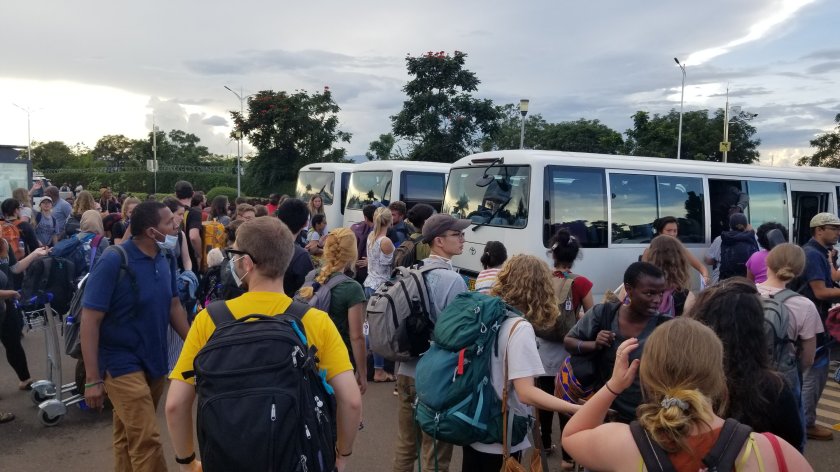
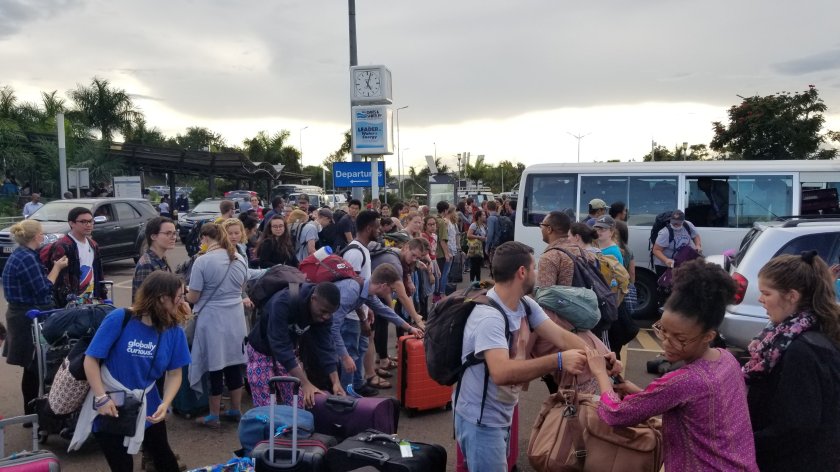
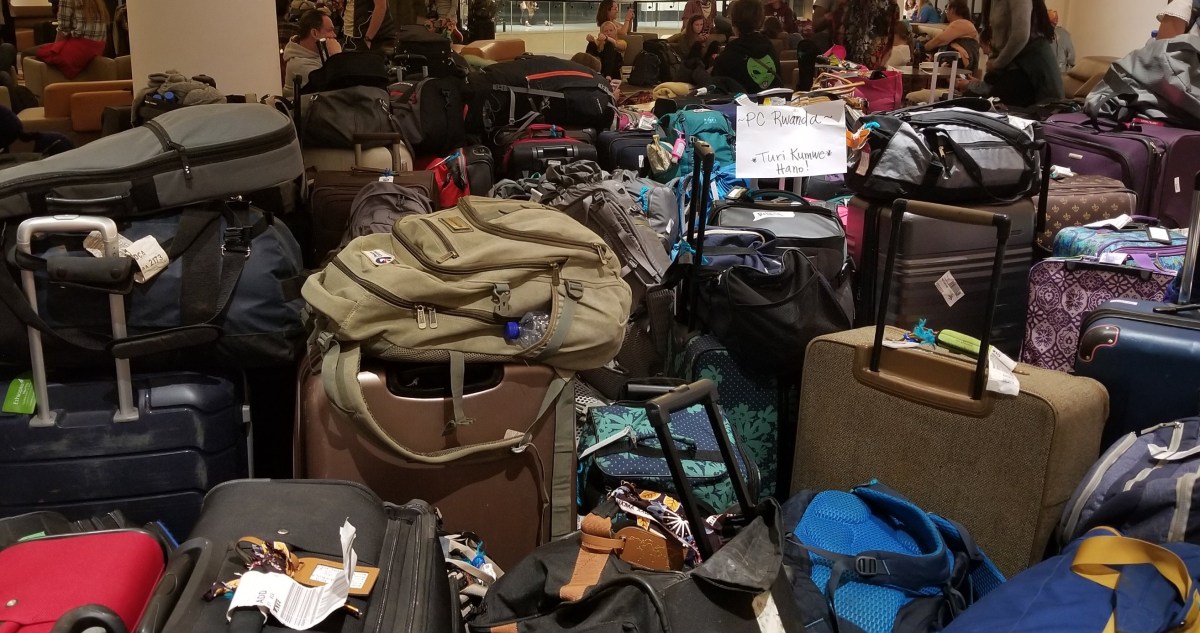
Unloading all of our luggage in the Kigali airport parking lot.
More unloading.
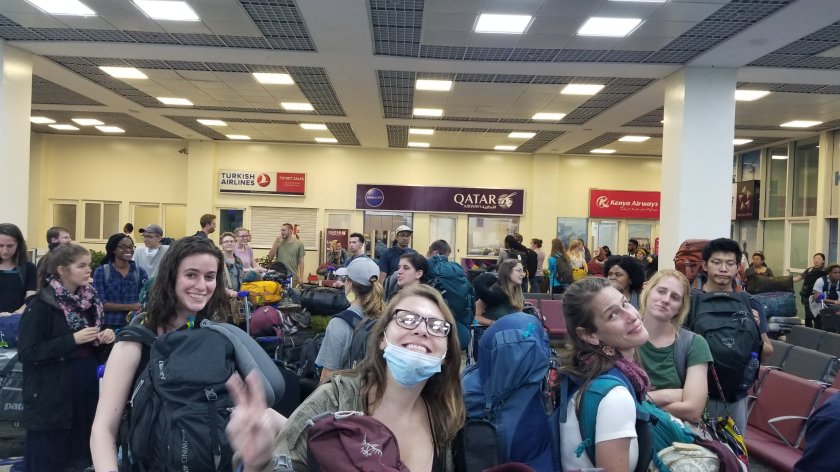
Me and my friends waiting in line at the Kigali Airport.
Left to right: Dani, Bri, Austin, Robyn, Darren.

Evacuation happened so quickly. 

There are 700 volunteers in Peace Corps Africa who needed to get home, which became increasingly more and more challenging as borders were closing and flights became more limited. As the situation became more dire, commercial flights were no longer an option and Peace Corps chartered flights for us. 
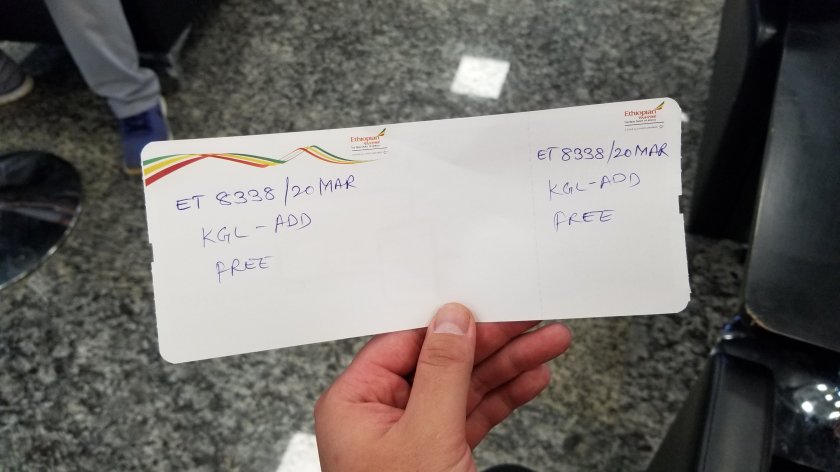
I thought this was hilarious. This is our ticket from Kigali to Ethiopia on our chartered flight.
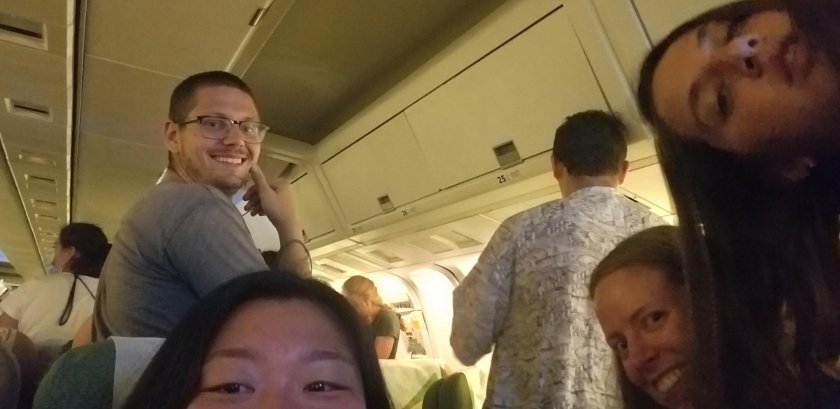
Our chartered flight did not obey regular airplane rules. It was half empty and filled with only PC Volunteers, so we walked around the cabin, drank duty-free wine, and had fun.
Left to right: Garret, me, Erin, Brooke.
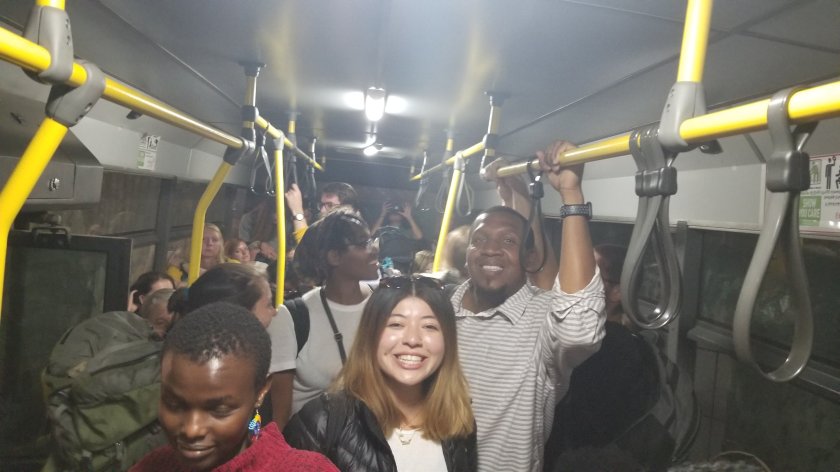
On the bus from our hotel in Ethiopia to the Airport.
Left to right: Clem, Sierra, Leia, Jerrion.

PC Rwanda was evacuated Friday night with a chartered plane, merely hours before the country shut its borders. We were “picked up” by PC Uganda, and together we went to get PC Malawi before going to Ethiopia. Addis Ababa was the meeting point for all of Peace Corps Africa to be evacuated to America. We arrived at ~5am and were on another chartered flight with PC Ethiopia, Zambia, Mozambique, Cameroon, Malawi, and Madagascar at 1a the next day/night. I have to say, it was fun meeting the other volunteers and exchanging stories about our countries. I wish It had been under different circumstances, but as we say in Rwanda, “bibaho” or “it happens.” 

The evacuation has been a very stressful time for everyone. We’d get emails notifying us if we’d be on a flight that day, be on standby, or wait another day to be evacuated. We were always on our toes, ready to move, and so caught up with the entire evacuation process that it never occurred to us that these would be our last moments together. With everything that’s been going on, it didn’t even occur to me that I’d have to say goodbye to everyone. My friends and I enjoyed one, final night together in DC before we all fly out to our respective homes in the morning. It’s sad that this is how our stories end.

With that, it looks like my Peace Corps service has come to its final moments. Thank you all for joining me on this adventure; it was a pleasure to share it with you. 

Evacuation Timeline
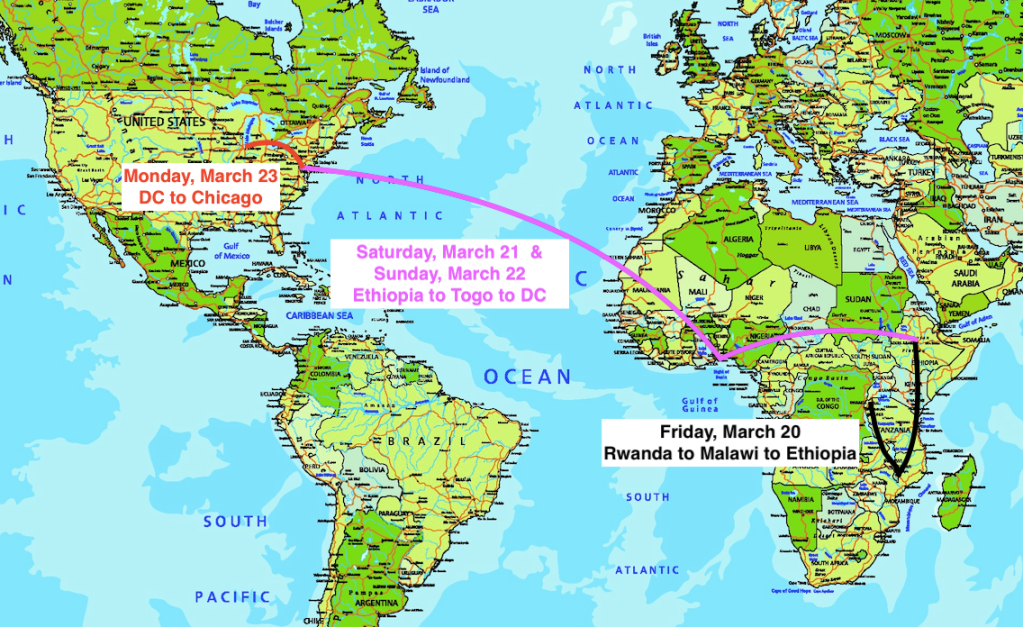
Monday  – Email from our Country Director that we will be evacuating

Thursday – Left site 

Friday – Flight from Rwanda to Malawi to Ethiopia 

Saturday – Flight to DC from Ethiopia, refueled in Togo

Sunday – Arrival in DC

Monday – Fly home to Chicago 
How the Coronavirus is Affecting Peace Corps

The coronavirus is making headlines. We have been getting a lot of email updates from our Country Director (CD) about potential action plans regarding the outbreak and if it gets too close to Rwanda. Peace Corps volunteers and staff are given a travel ban to specific countries to reduce the risk of contraction, while some countries are given more severe measures.

Peace Corps Volunteers in China and Mongolia have been evacuated. These countries have been recalled, but will be resumed once the outbreak is contained. A similar protocol occurred when Ebola was at its peak in West Africa circa 2014. A a total of 340 Volunteers from Liberia, Sierra Leone, and Guinea were sent home. If the coronavirus comes to Africa and threatens volunteers, a similar protocol will take place. As of February 25, there have been two confirmed cases in Northern Africa.

One of my fellow volunteers pointed out that it’s easier to confirm cases in developed countries, and much more difficult to do so in underdeveloped ones. There are likely more cases in Africa that haven’t been confirmed.

The benefit of the Ebola crisis is that many African countries have been diligently screening travelers upon arrival. So, there’s already a process in place to counteract the coronavirus and Rwanda is no exception. In fact, WHO even commended Rwanda’s preemptive measures against Ebola. Rwanda borders the D.R. Congo and Uganda, both of which have multiple confirmed Ebola cases. Despite its proximity, Peace Corps Rwanda is still operating because of the preventive measures and hopefully it will continue to do so even as the coronaviruses creeps closer.

That’s all I know for right now, but our email updates from our CD keep on coming.

The End of the Beginning

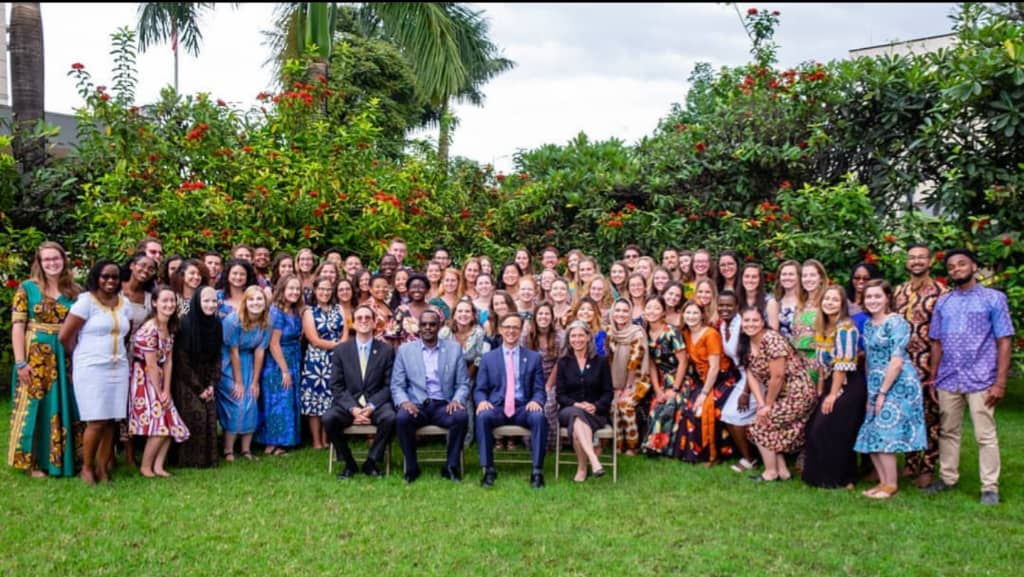
The Ambassador is on the left and all of us are cheering because we just finished our oath and became official Peace Corps Volunteers.


Just like that, Pre-Service Training (PST) is over and we’re all officially Peace Corps Volunteers! On Tuesday we swore-in and took our oaths at the US Embassy in Kigali. We were joined by our supervisors, the Ambassador, the Country Director, and Peace Corps Staff. It was a huge celebration that concluded our training and initiated our service. It’s the end of the beginning.

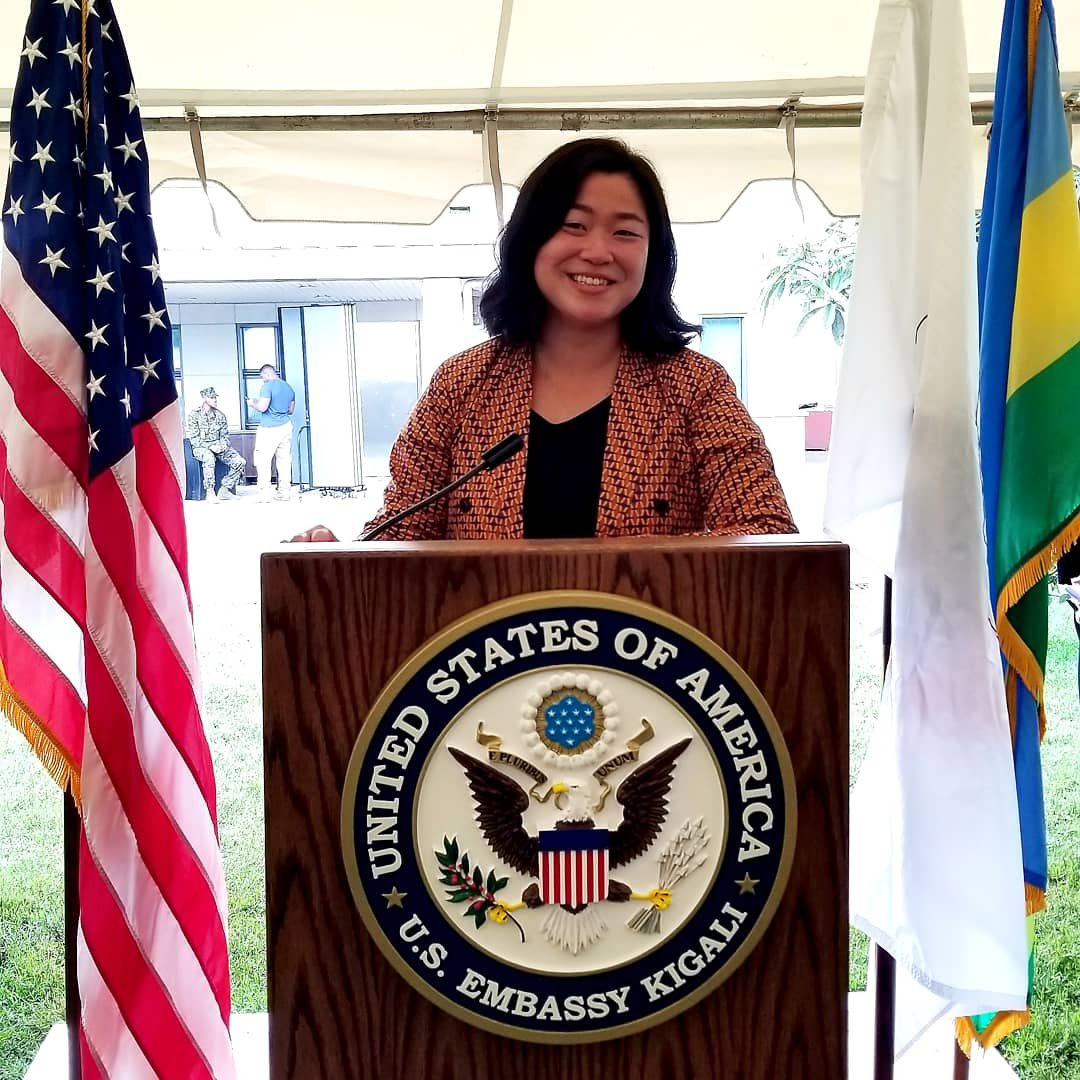
I think my favorite part was seeing everyone’s outfits we made for the special event. It’s very common for people to pick fabrics from the market and bring them to a tailor with a specific design in mind, making the outfit a complete reflection of the individual. I chose to wear a “power suit” for the event and, oh man, I felt powerful.

Podim pose.
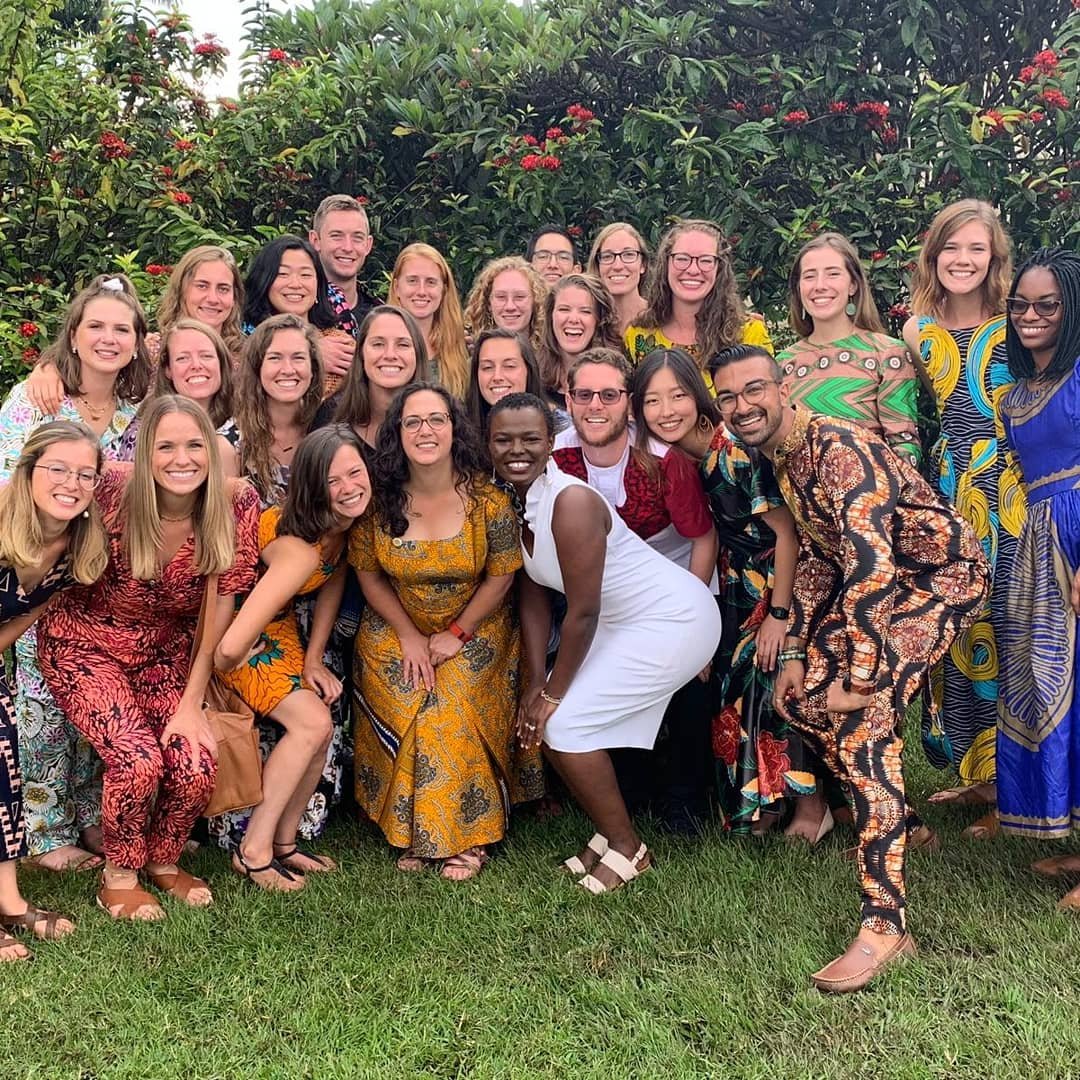
Our Health 11 group photo! I’m one of the taller ones, so find me in the back row.

The entire day was bitter sweet. It’s hard to believe that our three months of training went by so quickly and the following morning we all left to our sites. For most of us, this was our last time seeing each other for the next three to six months. As I’m writing this entry, I’m sitting alone at my site. I was installed a few days ago and it feels like night and day compared to PST.

This entire moment of discomfort is meant to be just that, a moment. I don’t know how or when, but one day I’ll be ready to fully embrace my new life here, even if I’m resisting it now.

During PST I was constantly surrounded by 70 volunteers, our teachers, PC staff, my host family, and I rarely had any free time to myself. However at site, it’s just me, I’m all alone, and I have too much time. The closest volunteers are either a 1.5 hour walk or a 50 minute walk and a 30 minute bus ride away. I feel alone and unprepared. I don’t have any furniture, my mattress is on the floor, and I eat on the ground out of my sauce pan because I don’t have any plates. I wish moving into a new place was as easy at it is in the States where I could go to a Costco, Target, or CVS to get food and the necessities, but my old life doesn’t fit me anymore. This entire moment of discomfort is meant to be just that, a moment. I don’t know how or when, but one day I’ll be ready to fully embrace my new life here, even if I’m resisting it now.


When I decided to make a blog about my experience as a Peace Corps Volunteer, I made a promise to myself and to anyone reading to show all the good parts and the bad parts. I don’t want social media to show a warped version of my experience where it’s only ups and highs and no downs and lows. I want to be real, raw, and vulnerable with you.

Rwanda in the News

Here are some amazing articles I came across a few days ago. I think they’re worth the read and can help dismantle our Americanized misconceptions about Africa. Rwanda’s development is truly amazing and I hope you think so too.

How Women are Stepping Up to Remake Rwanda

Excerpt 1.

“You had the majority of the dead—men,” she says. “The majority of the fugitives—men. The majority of the prisoners—men. Who will run the country?”

Out of tragedy, necessity, and pragmatism, women—up to 80 percent of Rwanda’s surviving population—stepped in to fill the leadership void.

Excerpt 2.

The next step in Rwanda’s gender evolution, says Mary Balikungeri, director and founder of the Rwanda Women’s Network, is focusing on men and “how we transform our own families, our own husbands.”

“We cannot change much if these men don’t change the way they look at things, so we need to bring them into a dialogue,” she says.

Rwanda Breaks Its World Record: Now Has 68% Women In Parliament

Design a site like this with WordPress.com
Get started