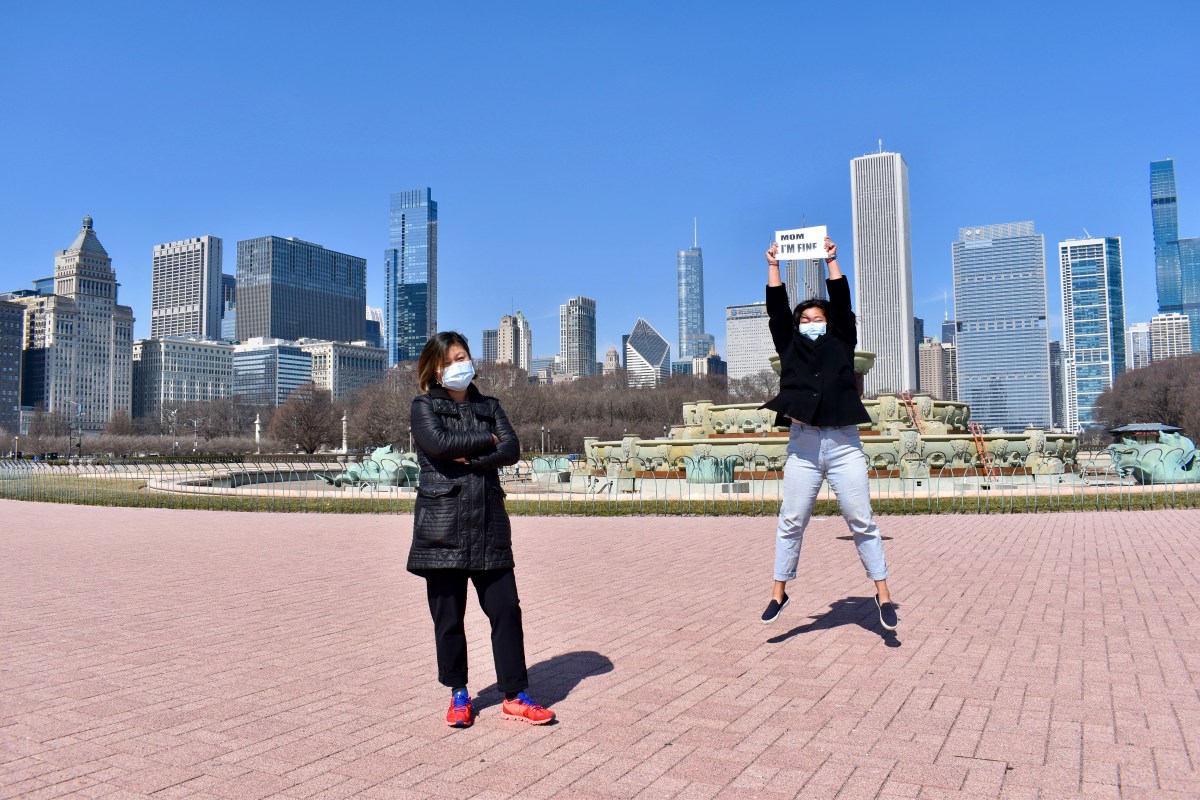
I’m back home. My mom and I took advantage of the beautiful weather and went for walk (6 feet apart). I couldn’t resist the opportunity to take this photo of us (notice the social distancing and masks).
This isn’t the way I wanted to come back home or the way I wanted to leave Rwanda, but here we are. It’s not the way I had imagined my arrival. In my mind, I would’ve been embraced by my parents at the airport, sharing a car ride full of two years worth of happy chatter on our way back home. Instead, I arrived to an empty airport with a text from my parents instructing me to take an Uber to an Airbnb. The cold weather didn’t help with the warm welcome.
Tough, but bibaho, it happens.
So now that I’m back, what’s next?
This is a great question. All of the volunteers who are back are forced to confront the reality that we came home much sooner than expected without anything planned. We left our lives back in our country of service – our homes, jobs, etc.
A lot of people have been asking if I plan on going back. Though reinstatement is possible, and has been done before, nobody knows the timeline. It could be anywhere between 2-6 months before going back and that’s a long time to wait for the possibility of it happening. Peace Corps is in uncharted territory – all programs are suspended. It took so much time and emotional energy preparing to leave and even more when we were being evacuated, I don’t know if I want or could do it again.
I had an amazing time doing the Peace Corps in Rwanda, and I’ll always remember it fondly. I learned an incredible amount about the culture, food, people, language and so much more. As I sit here reflecting on my past 6 months, one moment stands out from the very beginning.
In our first week of training, Jody Olsen, the Peace Corps Director came to Rwanda and told us what she gained from her service. She said by doing the Peace Corps, she gave herself away in order to find herself again. That’s exactly how I feel, I gave myself away and found myself again (cheesy, I know). I’m leaving with more clarity and direction than when I started, which exactly what I had hoped to gain from this. I feel ready to tackle the “real world” and I don’t know if I was six months ago.
It’s unfortunate that my service ended abruptly, prematurely, and unexpectedly, but I’m at peace with it. I left in a better place than where I started. As always, thank you for tagging along. Being able to write about and share my experiences with you has been an absolute joy.
This week has been non-stop because all Peace Corps countries are being evacuated due to the COVID-19 pandemic. It looks like my Peace Corps service is coming to an abrupt end. Early Monday (3.16.20) morning, we got an email from our Country Director that Peace Corps Washington DC is ordering that all countries must evacuate their volunteers. As I am writing this concluding entry, I want to ensure you that I am safe in Washington D.C. and will be on a flight to Chicago tomorrow morning.
Though they evacuated three countries in West Africa in 2014 because of Ebola, this is the first time in program history when everyone is being evacuated. Some countries were already in the process of evacuation before it came from Peace Corps Washington, but now it’s mandatory.
The straw that broke the camel’s back was South Africa closing its borders. South Africa is where all volunteers in the continent would get sent to in medical emergencies. Since their borders are closed, we would have nowhere to go in case of an emergency, thus putting us in more danger. Out of the 7,000 volunteers serving world wide, 46% of us are in Africa.
Rwanda also had its first confirmed case four days ago, on March 13, but it will spread very quickly despite the proactive measures the government has installed. From a public health perspective, COVID-19 will spread incredibly quickly in Rwanda because it’s the size of Rhode Island and has over 12 million people, making it the most densely populated country in Africa. The government understands this threat and has, quite literally, shut everything down within 24 hrs. All social gatherings were discouraged – no weddings, church, funerals, concerts, and schools were closed. Stores, restaurants, and markets have hand-washing stations in front of their entrances and a security guard who ensured that everyone used it. This all happened within 24 hrs of Rwanda confirming its first case.
It’s quite shocking how differently the Rwandan people have been acting since the first confirmed case. Before March 13, everyone was very relaxed about COVID-19, but once we had our first confirmed case, everyone started to take it more seriously and began treating me differently.
To them, I am Chinese, while my American identity is secondary and my Korean one is invisible. The amount of staring, COVID-19 comments, and racism has skyrocketed. But it’s not only Asians, any “umuzungu” or foreigner is being accused of having the virus and spreading it. My friend, who is a white, blond haired, and blue eyed male had an entire row on the bus to himself because nobody wanted to sit next to him. Any other time, people approach him and want to be his friend because he’s an American, but now people avoid him.
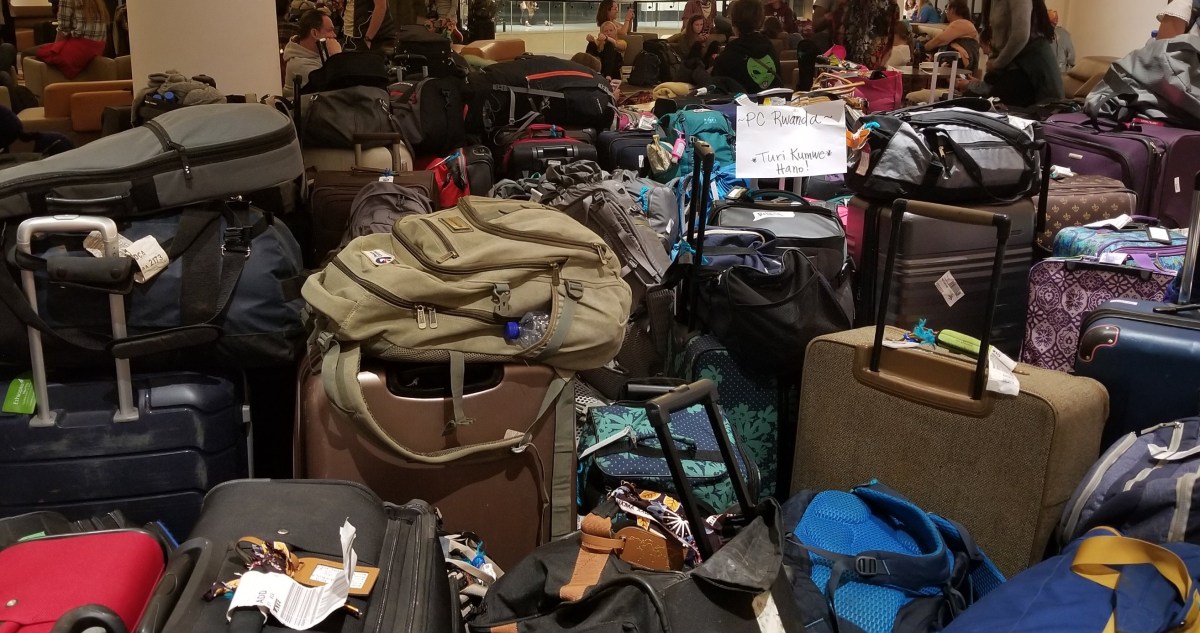
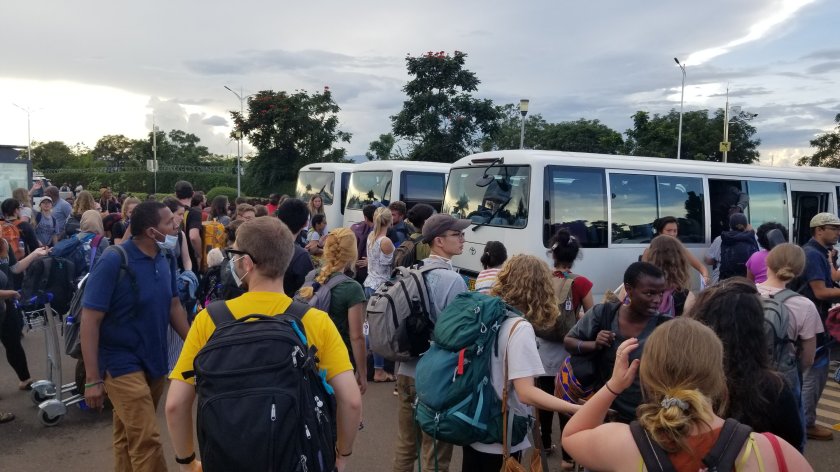
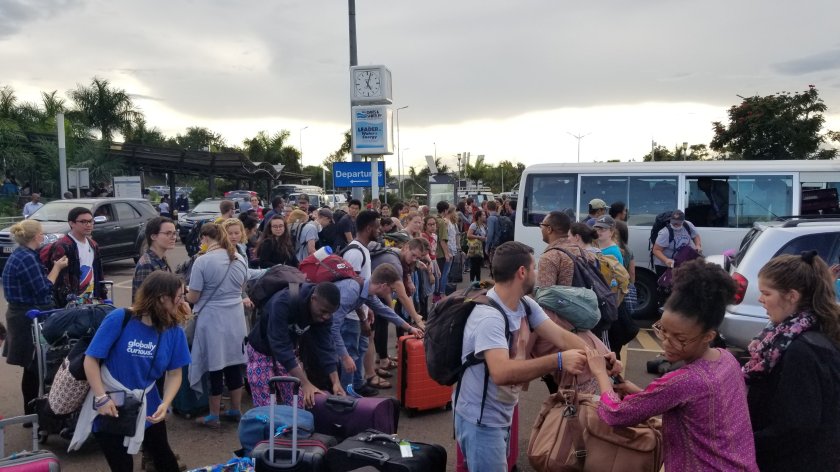
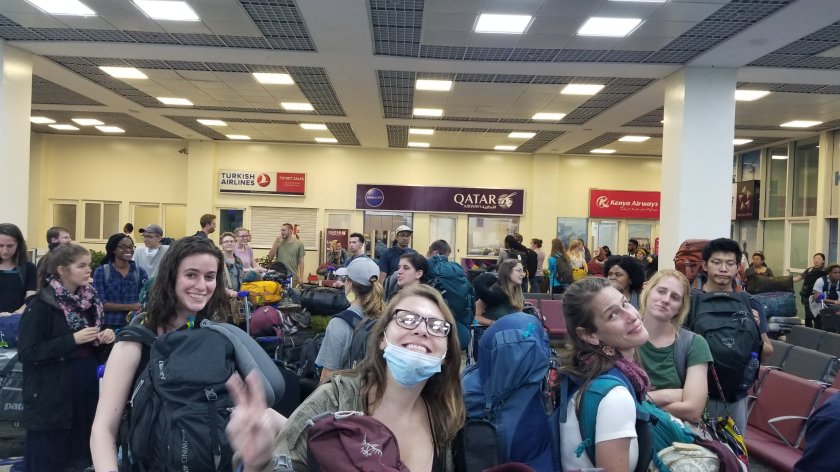
Unloading all of our luggage in the Kigali airport parking lot. More unloading. Me and my friends waiting in line at the Kigali Airport. Left to right: Dani, Bri, Austin, Robyn, Darren.
Evacuation happened so quickly.
There are 700 volunteers in Peace Corps Africa who needed to get home, which became increasingly more and more challenging as borders were closing and flights became more limited. As the situation became more dire, commercial flights were no longer an option and Peace Corps chartered flights for us.
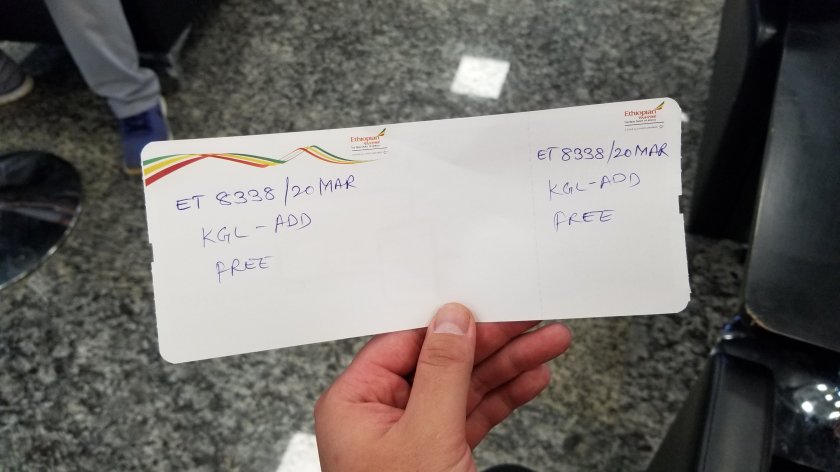
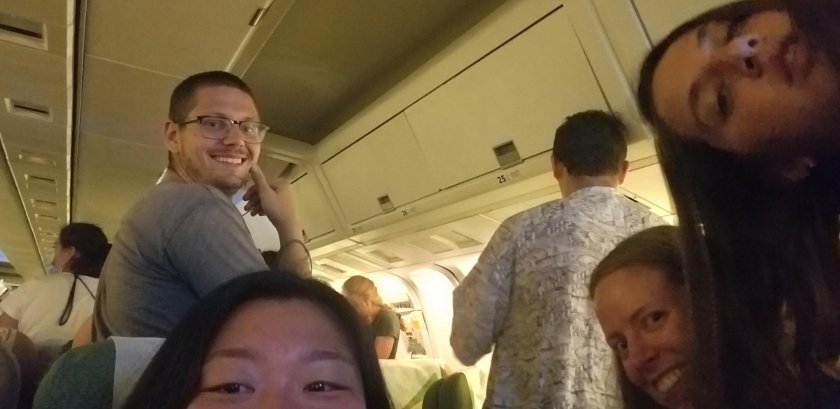
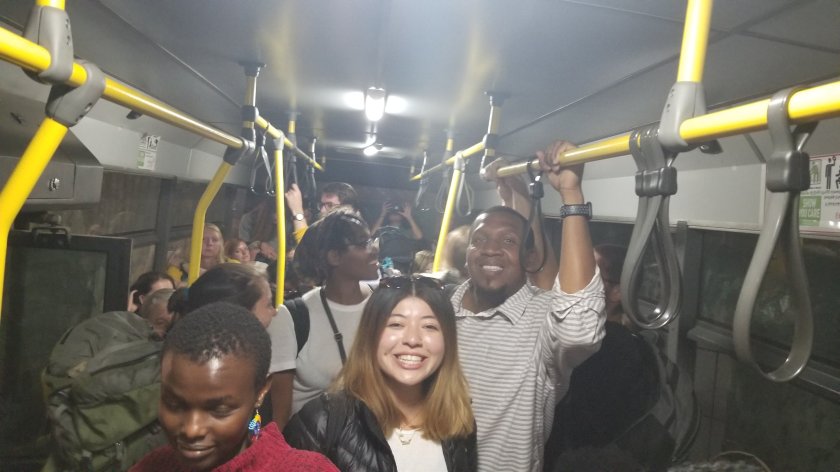
I thought this was hilarious. This is our ticket from Kigali to Ethiopia on our chartered flight. Our chartered flight did not obey regular airplane rules. It was half empty and filled with only PC Volunteers, so we walked around the cabin, drank duty-free wine, and had fun. Left to right: Garret, me, Erin, Brooke. On the bus from our hotel in Ethiopia to the Airport. Left to right: Clem, Sierra, Leia, Jerrion.
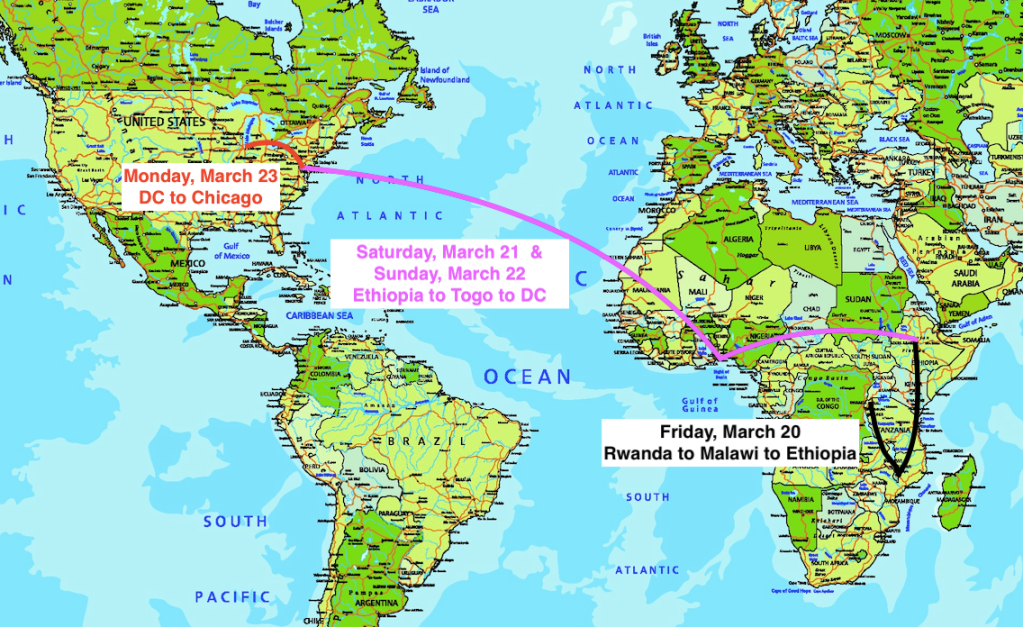
PC Rwanda was evacuated Friday night with a chartered plane, merely hours before the country shut its borders. We were “picked up” by PC Uganda, and together we went to get PC Malawi before going to Ethiopia. Addis Ababa was the meeting point for all of Peace Corps Africa to be evacuated to America. We arrived at ~5am and were on another chartered flight with PC Ethiopia, Zambia, Mozambique, Cameroon, Malawi, and Madagascar at 1a the next day/night. I have to say, it was fun meeting the other volunteers and exchanging stories about our countries. I wish It had been under different circumstances, but as we say in Rwanda, “bibaho” or “it happens.”
The evacuation has been a very stressful time for everyone. We’d get emails notifying us if we’d be on a flight that day, be on standby, or wait another day to be evacuated. We were always on our toes, ready to move, and so caught up with the entire evacuation process that it never occurred to us that these would be our last moments together. With everything that’s been going on, it didn’t even occur to me that I’d have to say goodbye to everyone. My friends and I enjoyed one, final night together in DC before we all fly out to our respective homes in the morning. It’s sad that this is how our stories end.
With that, it looks like my Peace Corps service has come to its final moments. Thank you all for joining me on this adventure; it was a pleasure to share it with you.
Evacuation Timeline
A map of my evacuation/ travel timeline.
Monday – Email from our Country Director that we will be evacuating
Thursday – Left site
Friday – Flight from Rwanda to Malawi to Ethiopia
Saturday – Flight to DC from Ethiopia, refueled in Togo
Before coming here, I knew having both running water and electricity were slim. I have electricity, but no running water. I didn’t have electricity during my first month, which was challenging, especially when the sun sets everyday at 6:30p.
Water is another problem. As volunteers, we’re always so curious to know what other people’s “water situations” are. Who has a spigot? Is it in their house? Outside? In the village? The lucky ones have one in their house, the not so lucky ones have to walk up/down a hill to fetch water or hire someone to get it for them.
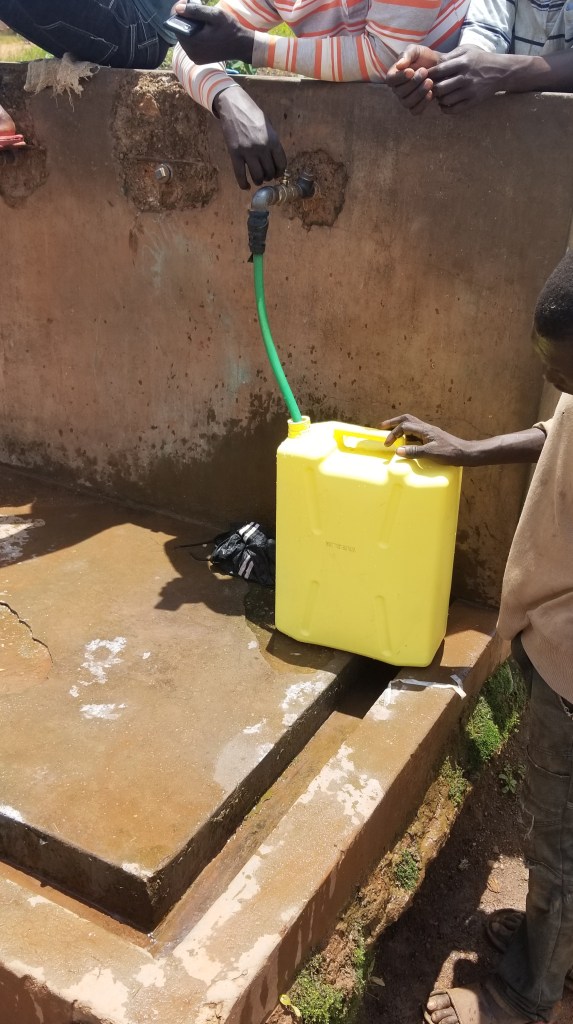
Like the locals here, I use jerry cans to transport and store my water. They can hold 20L and weigh 44 lbs when full. It’s physically exhausting to transport water to my house, but luckily, the spigot is only 50m meters away and downhill when walking back home.
Filling up my jerry can at the local spigot!
So, how much does water cost here? It depends on where you live in Rwanda. Some of my friends have to pay 100-200 RWF for a full jerry can, which is roughly $.10 – .20 USD. However, when it’s the dry season it can get up to 1000 RWF (~$1 USD). I think I lucked out, because mine is only 30 RWF per can, which is only $.30. My dad joked that he’d cover my monthly water bill by sending me $3.00, which would get me 10 jerry cans!
Though the water is cheap through our American lens, it can be quite expensive for Rwandan families. Before coming here, we were told that cleanliness and hygiene is one of the most valued aspects of the culture. I never understood why until I went into the village life where I can see how water insecurity separates social classes. When water was scarce, I sacrificed my personal hygiene. I didn’t wash my clothes, I didn’t shower every day, and you could tell. I was disgusting. Not having a reliable source of water, especially during the dry season, took a huge psychological toll on me. I’m not religious, but I would pray for rain so I could collect rainwater off of my roof. I often find myself stressing out about how to ration it – do I wash dishes, clean my clothes/shoes, wash my hands, brush my teeth, shower? I never thought I’d sacrifice hygiene to the extent that I have, but here we are. Without a second thought, I prioritized my water to drink and cook. I even starting thinking of ways to change my lifestyle so I would use less water, for example, I tried finding ways to make food that required the least amount of dishes to wash, working out less so I wouldn’t have to shower, eating from the pan so I wouldn’t have to wash a plate, etc. On top of all of that, I’d recycle the water I used to do laundry and wash my dishes and vegetables with so I can flush my toilet. (I have a flushing toilet, but no running water).
I can see how water scarcity affects the families here – their clothes and shoes are dirty and smelly. They don’t have good hygiene. Having access to water is one of the most defining determinants of social class. The huge emphasis on cleanliness is a result of that.
The coronavirus is making headlines. We have been getting a lot of email updates from our Country Director (CD) about potential action plans regarding the outbreak and if it gets too close to Rwanda. Peace Corps volunteers and staff are given a travel ban to specific countries to reduce the risk of contraction, while some countries are given more severe measures.
Peace Corps Volunteers in China and Mongolia have been evacuated. These countries have been recalled, but will be resumed once the outbreak is contained. A similar protocol occurred when Ebola was at its peak in West Africa circa 2014. A a total of 340 Volunteers from Liberia, Sierra Leone, and Guinea were sent home. If the coronavirus comes to Africa and threatens volunteers, a similar protocol will take place. As of February 25, there have been two confirmed cases in Northern Africa.
One of my fellow volunteers pointed out that it’s easier to confirm cases in developed countries, and much more difficult to do so in underdeveloped ones. There are likely more cases in Africa that haven’t been confirmed.
The benefit of the Ebola crisis is that many African countries have been diligently screening travelers upon arrival. So, there’s already a process in place to counteract the coronavirus and Rwanda is no exception. In fact, WHO even commended Rwanda’s preemptive measures against Ebola. Rwanda borders the D.R. Congo and Uganda, both of which have multiple confirmed Ebola cases. Despite its proximity, Peace Corps Rwanda is still operating because of the preventive measures and hopefully it will continue to do so even as the coronaviruses creeps closer.
That’s all I know for right now, but our email updates from our CD keep on coming.
I just spent the last two weeks with my mom! This is what we’ve been up to.
I must be the luckiest Peace Corps Volunteer because my mom is here! She came with Partners In Health (PIH). PIH is a non-profit organization started by Dr. Paul Farmer and Dr. Jim Kim to help developing countries improve their health care system by making it more accessible to everyone. For a wonderful read, Mountains Beyond Mountainsby Tracy Kidder beautifully illustrates their challenges making healthcare equitable and accessible in developing countries, such as Rwanda.
The first week she and her PIH group were traveling around the country, visiting health centers, hospitals, and a medical university that PIH supports. I met up with my mom and her group in Kigali last Saturday for lunch. I typically go to bed around 9p, but I was so excited to see her that I was up until 2am. This has been the longest I’ve gone without seeing my family (5 months) and it was such a happy and emotional reunion. Many people on the PIH trip are parents (especially moms) and seeing my mom and I together hit them a special way.
I wasn’t the only guest at the PIH lunch, we were joined by Dr. Anges Binagweaho. She’s Rwanda’s former Minster of Health, a Senior Lecturer in the Department of Global Health and Social Medicine at Harvard Medical School, and a Clinical Professor of Pediatrics at the Geisel School of Medicine at Dartmouth, to name a few of her titles. She is credited with turning around Rwanda’s health care system by insisting that health – in its physical, mental, and social facets – is a human right. She implemented national projects to encompass the fuller picture of health, ones that we are continuing at our health centers at the ground level. I felt like I met a celebrity!
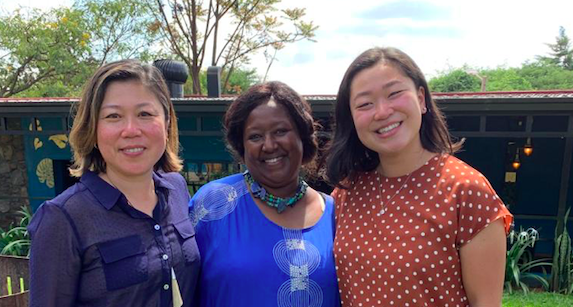
Mom, Dr. Agnes, and Me!
My Mom and I spent our weekend in Kigali together – I thoroughly enjoyed leeching off the hotel room’s running water, hot water, showers, air conditioning etc. I loved every moment of it before I brought my mom back to my village life, where I don’t have any of those luxuries.
I showed her my house, health center, and market. Everyone was so eager to meet her! Vendors who I loyally buy all my fruit and vegetables from were so happy to welcome her. One of them gave us a papaya as a welcome gift. It brought my mom to tears seeing that in a few short months I’ve built these relationships. I’m happy that she got to see my life here. I think she’s a little jostled by how rough it is, but I’m glad I can share a small sliver of my life with her here.
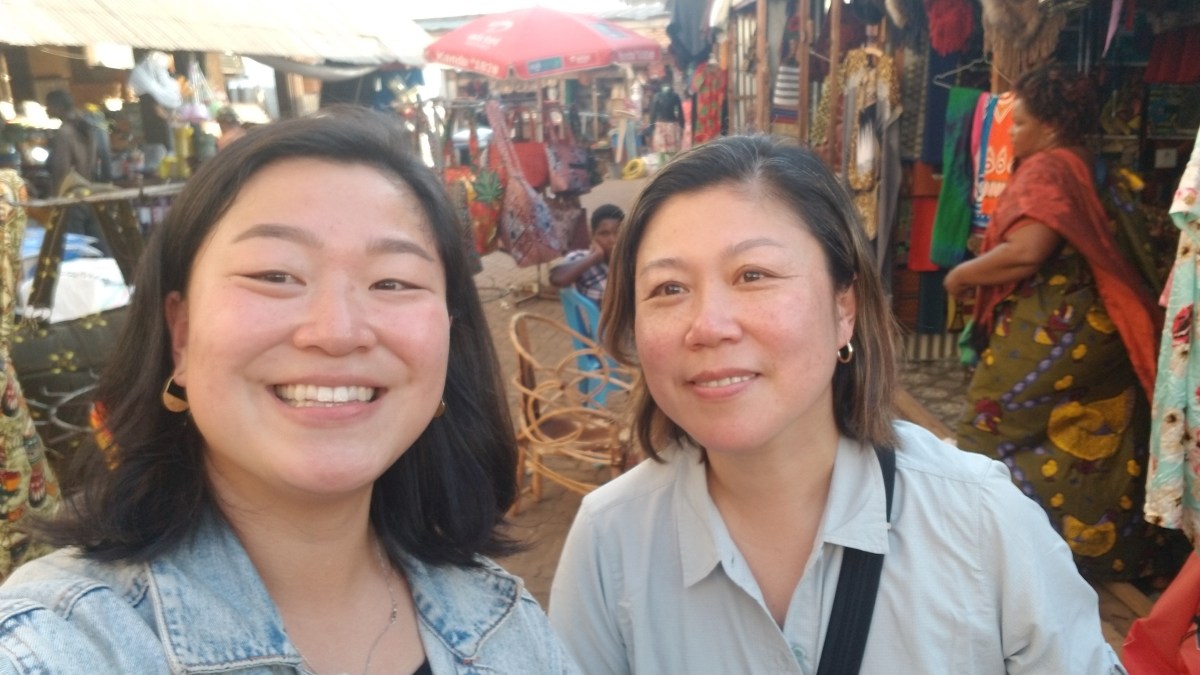
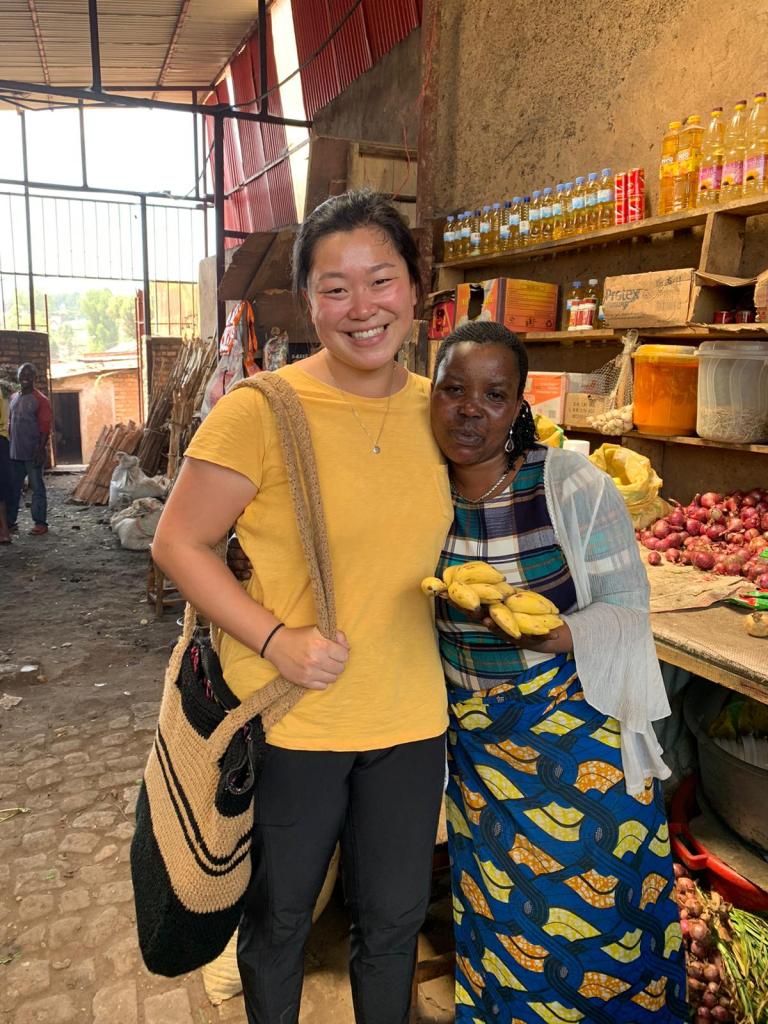
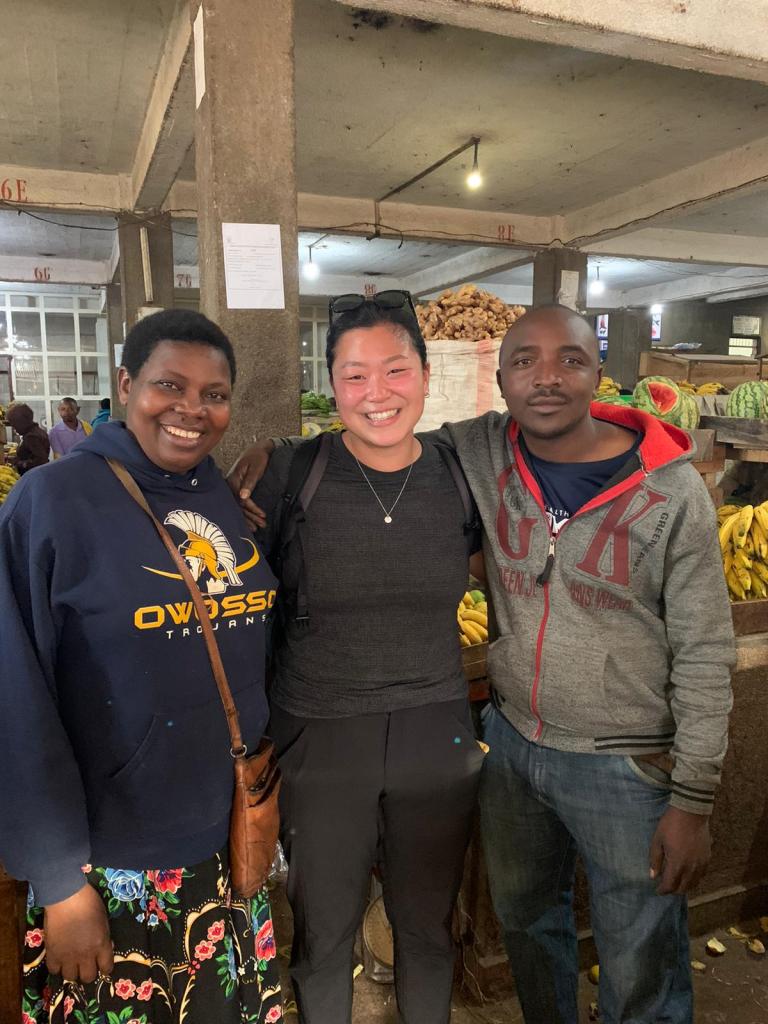
Left: Me and my Market Mamma! Her name is Mamma Fiona and she’s incredible. She has a stall at the market closest to my home and health center. Her vegetables are always so fresh, she’s the first person I go to whenever I need something. She knows how much I love those small bananas and always helps me find them from other reliable vendors. Right: These are two other vendors from the big market in the city who I go to for my fruit. My mom really wanted to take photos of me with them to send to my dad back home.
We made the most of our time together, despite the fact that I still have work at the health center. On our way from Kigali to my village, we stopped by the Nyanza district where the King’s Palace is. Rwanda’s royal family lived in Nyanza, until 1960 when they transitioned out of the monarchy. We learned that penultimate king was overruled by the Danish because he didn’t accept Catholicism and the Christian Church, but his youngest son did. He was appointed as the next king of Rwanda, while his father was forcefully removed, because he allowed the new religions to wash over the country.
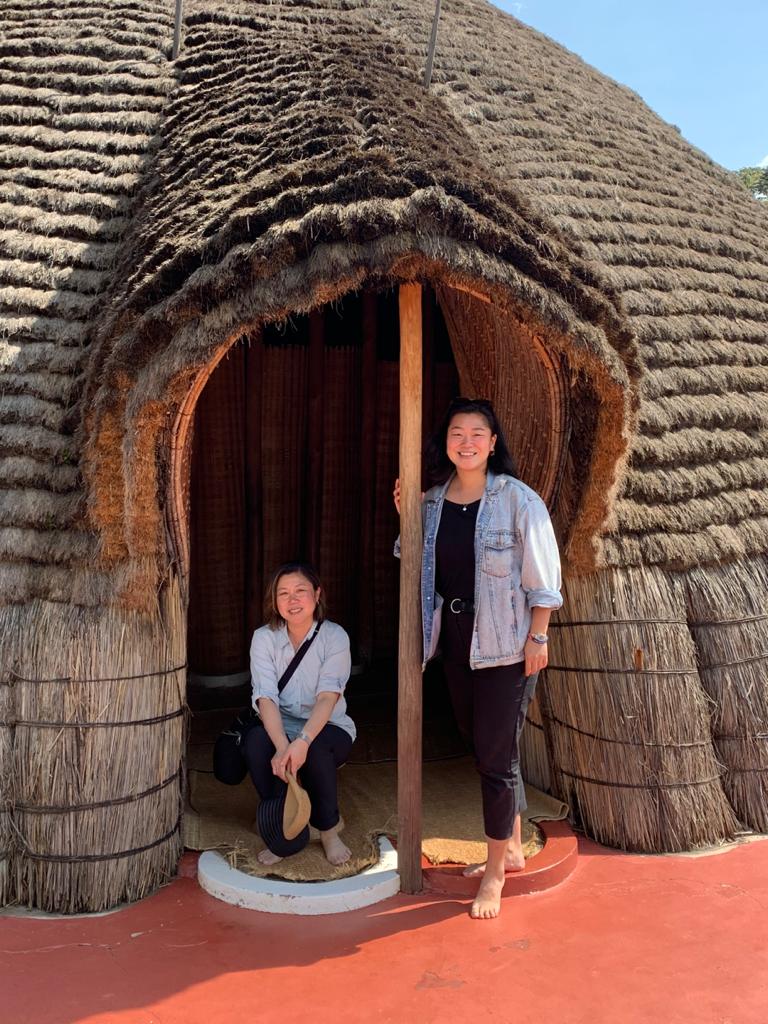
We’re at the King’s Palace. These replica hut was where the King lived. My Mom is sitting where the King would sit while I’m holding onto the Forgiveness Pole.
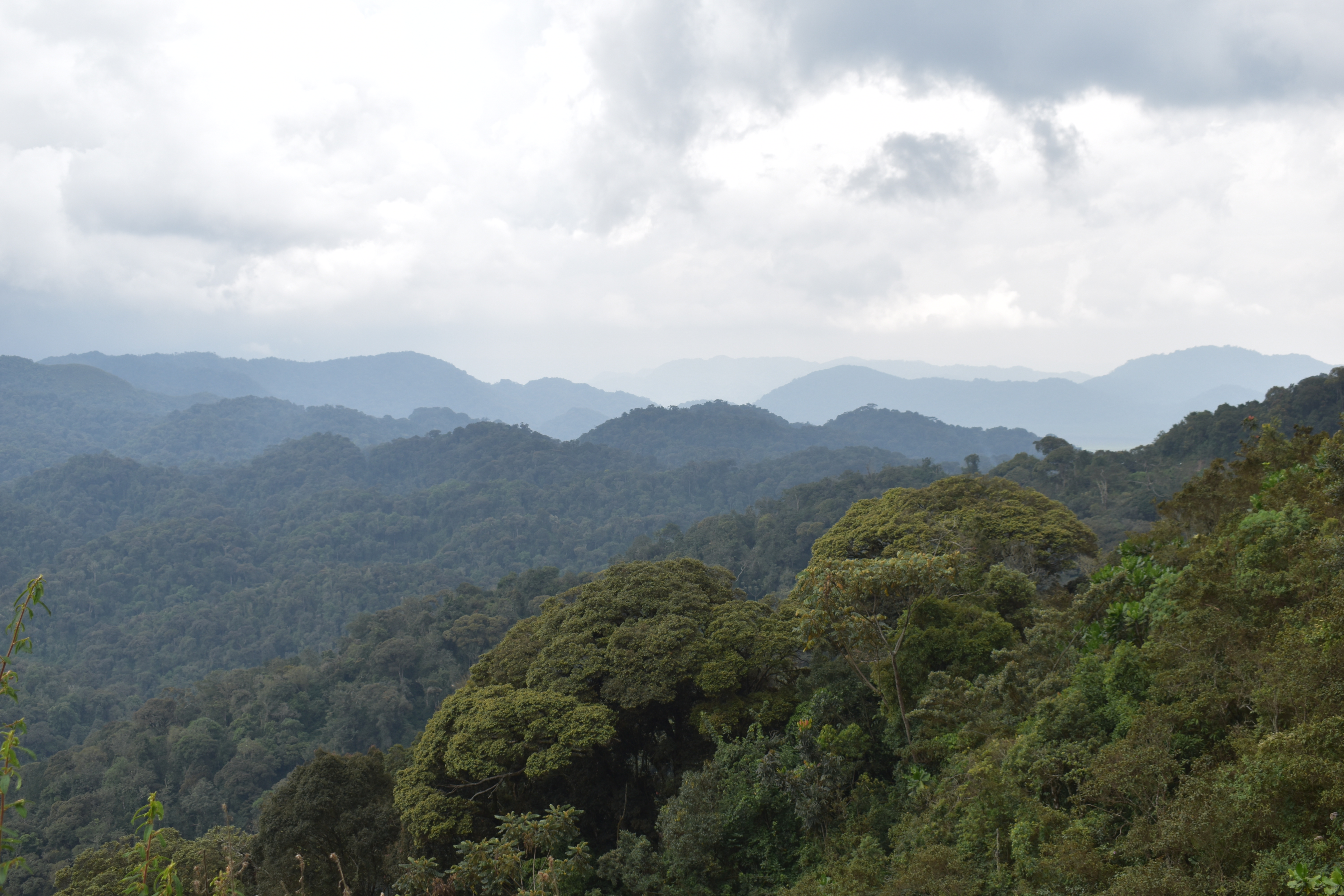
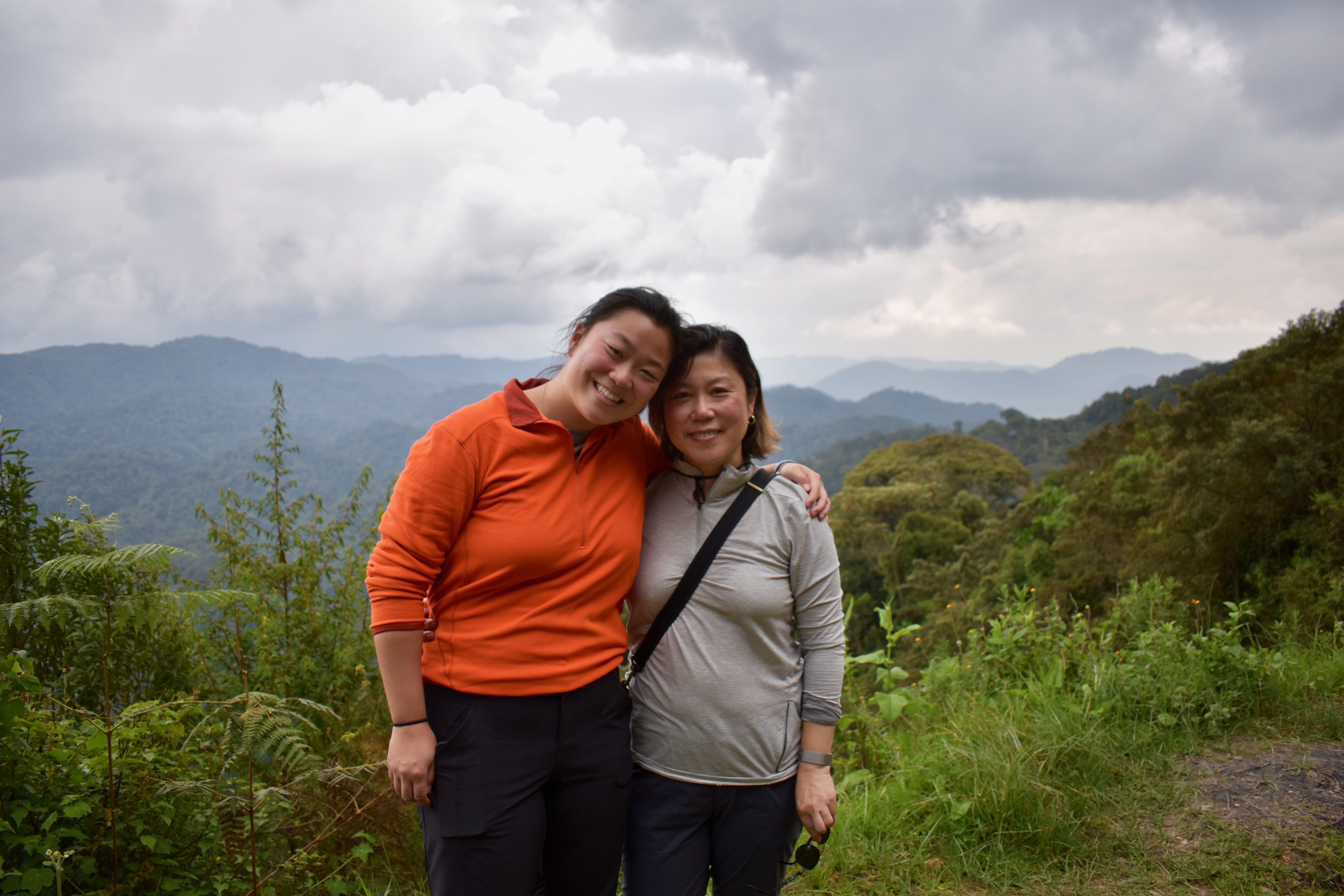
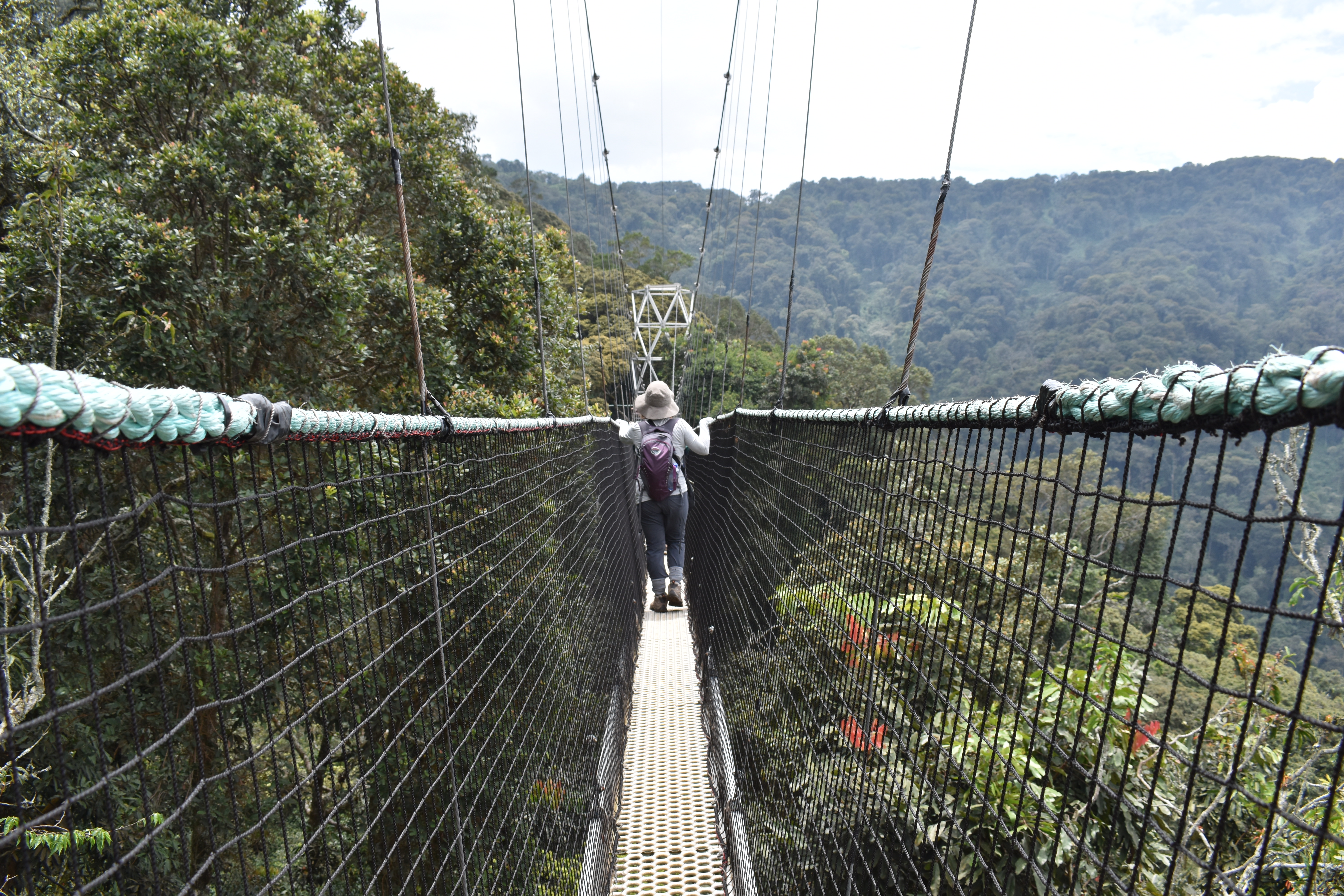
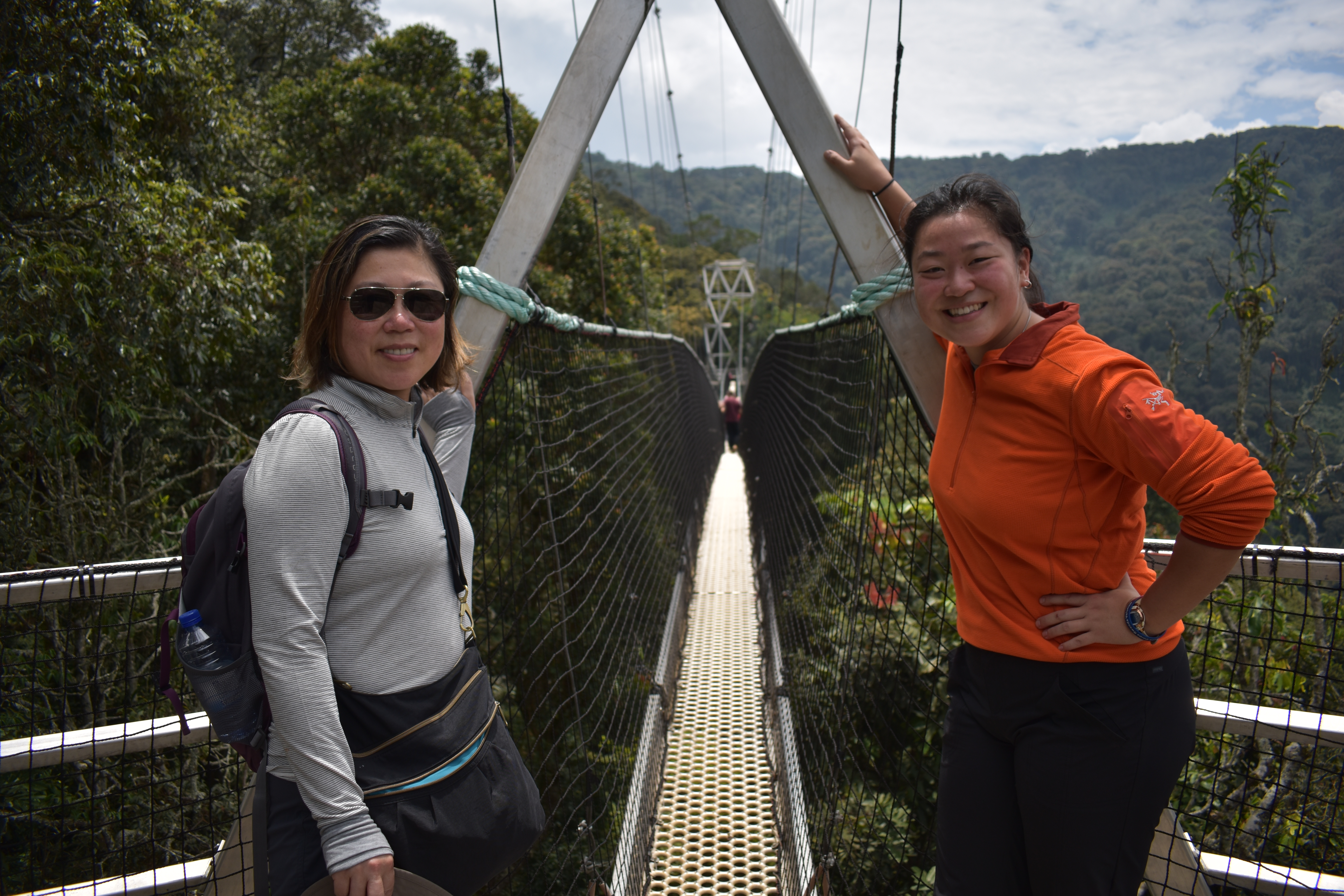
We also made a day trip to the Nyungwe Rainforest and a neighboring Tea Farm. Nyungwe is one of the most protected rainforests in Africa, it attracts tourists with its beautiful hikes to see Baboons, Colobus monkeys, and to do the Canopy Walk. It’s a 90m cable bridge suspended 60m above the ground in the rainforest. It wobbled so much!
Fun fact: The source of the Nile River comes from all the rainfall in Nyungwe!
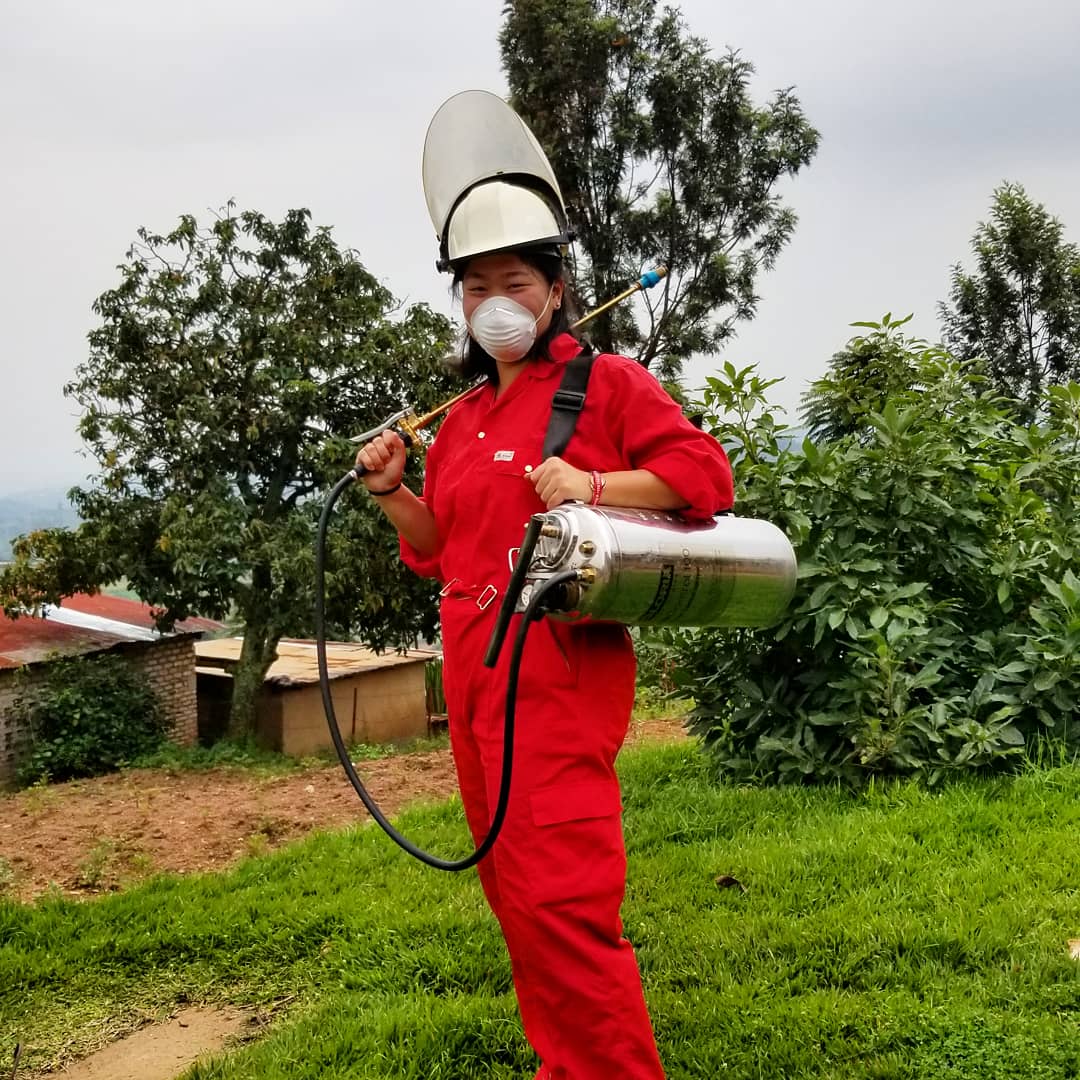
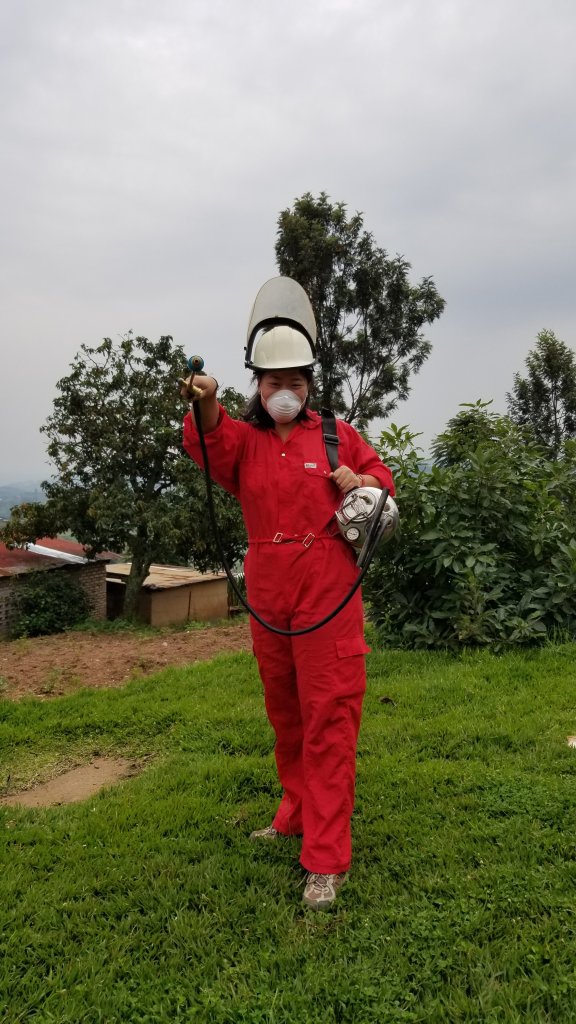
This past week has been very busy in the Southern Province, especially at my health center (HC). Every year, the government encourages families to have the inside walls of their homes sprayed with pesticides to kill mosquitos to reduce malaria. Indoor Residual Spraying (IRS) is a coating on walls that can last several months and can kill mosquitoes when they come into contact with it. It doesn’t directly prevent malaria, but prevents it from spreading. My HC has been used as a base by the government officials who are leading our Community Health Workers (CHWs) to spray homes in the 7 villages our HC serves. It’s especially important that IRS is implemented in Huye, my district, since it has one of the highest rates of malaria in the country!
Geared up like a spray operator!
That being said, I wanted to jump in on the action! I asked the woman leading the IRS operation and she allowed me to join her in the field with the CHWs. When talking to everyone about it, I learned that a lot of Rwandans are very resistant to IRS. I was confused because it’s paid for by the government and it reduces everyone’s chance of getting malaria, seems like a win-win to me! But I learned that it’s very inconvenient moving all of your belongings outside while the spraying happens, strangers would see the inside of your house and all of your belongings, the pesticide smells and gives people headaches, and above all, there’s a lack of education etc. It’s also the rainy season right now (I haven’t seen the sun since Sunday afternoon), and when everything has to be moved outside for several hours, the rain discourages IRS. It’s an uphill battle, but even if we spray one house, it’s a big difference for that one family.
Malaria Fast Facts:
It’s a preventable disease
It’s responsible for 10,000 maternal and 200,000 infant deaths worldwide
It can be treated properly when diagnosed quickly with a blood test
Here’s a funny story about my name and how I got my Rwandan one.
This happened a few months ago, but I think it’s a funny story worth sharing.
In Rwandan culture, it’s common for people to refer to you by your last name. A lot of the Rwandan teachers and PC staff often called me Kim or Kim Jo. When I first met my host brother, who was home briefly from Medical School, we had a fun conversation that went like this:
Me: Hey, I’m Joanna Kim, but a lot of people call me Jo.
Him: Hey! Ah, Kim, you must be Korean. The home of Samsung.
Me: Yes, wow, how did you know? (I was so impressed!)
Him: A lot of people from Korea have that last name. Hm, Kim, Kim Jo. Kim Jo. Hey, do you know Kim Jung Un?
Me: …
Him: I like his haircut.
Funny, right?! I’ve never had a conversation like that before, especially since nobody has ever compared our names like that. I hope it brings a smile to your face as it did to mine. It happened months ago and I still laugh about it!
On the topic of names, my host mother gave me a Rwandan name. Peace Corps recommended our host families to give us Rwandan names, especially if our American ones are difficult to pronounce, to help us integrate. On my second day with my host family, my host mom said that she would call me Keza (keh-zah). Names are an important part of Rwandan culture, there’s even a traditional naming ceremony for newborns where people offer names that reflect them or have a significant meaning behind the name. So, I asked my host mom, “what does Keza mean?” She said, “beautiful.”
I was embarrassed when she told me that. I never thought of myself as beautiful or ever being called that. Hopefully, I’ll grow into it.
We are a few days away from being a full month at site and I’m starting to settle into my new home and community in Huye. I figured that you are all very curious to know more about what my life is like here.
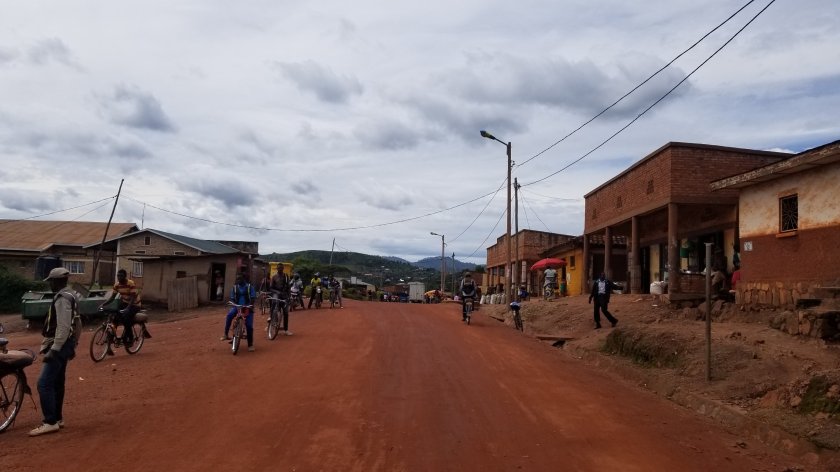
First thing’s first, I’m really lucky to be placed where I am. My site is very urban compared to other sites. The market next to my Health Center is open everyday. Some volunteers have markets open only every Thursday and Sunday, which can be anywhere from a 10-90 minute walk or a 20-45 minute bus/moto ride away. I also live in the “downtown” area of my village, which has small stores (boutiques) for snacks, toilet paper, and random things that all Rwandan boutiques seem to have.
The main road that my house, heath center, market, and stores are on.
Furthermore, I live ~3 miles from the third largest city in the country, Butare. The walk is also very flat, which is very lucky since we’re in the land of a 1,000 hills. The market in Butare has EVERYTHING – clothes, home appliances, restaurants, etc. It also helps that Butare is a “college” town, so there are a lot of coffee shops, bars, and even clubs in the area. I was initially really disappointed that my site was so urban and I’d be missing out on the “proper” Peace Corps experience of being in a very rural and isolated area. However, the volunteer who I am replacing asked me something that I haven’t forgotten, ‘why make life harder than it already is by being in an isolated site?’ He was right. Life here is difficult as it is, why would I want to make it more difficult for myself by having a market only twice a week, difficult to get to, and has a limited variety of food? One of my closest friends (emotionally, not geographically) told me that her market is only twice a week, open from 5-6:30p, and almost always has only potatoes and rarely anything else. That sounds really difficult to endure for two years. Having a big market nearby has definitely made life easier for me and made turning my new home into a home.
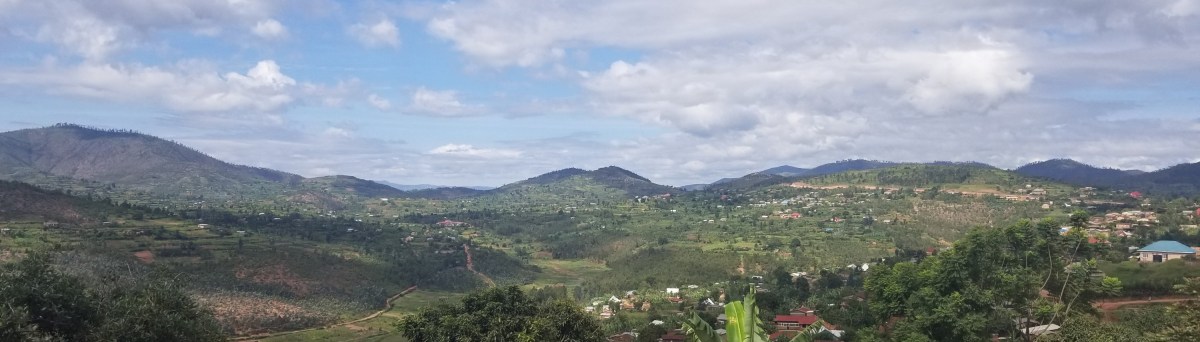
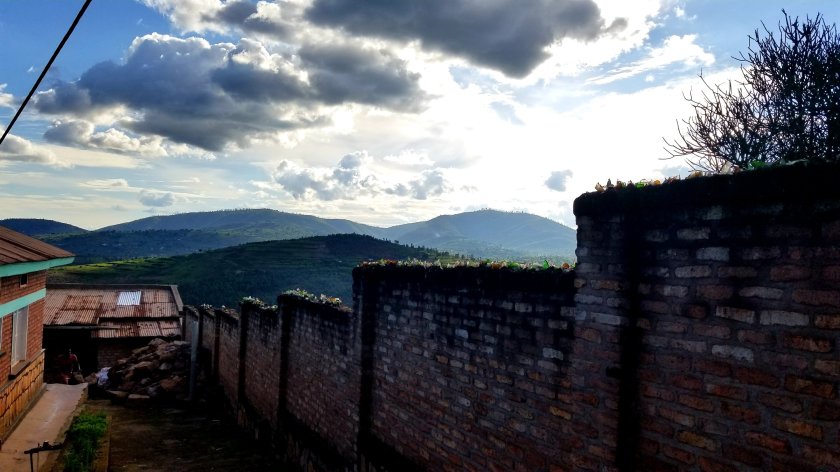
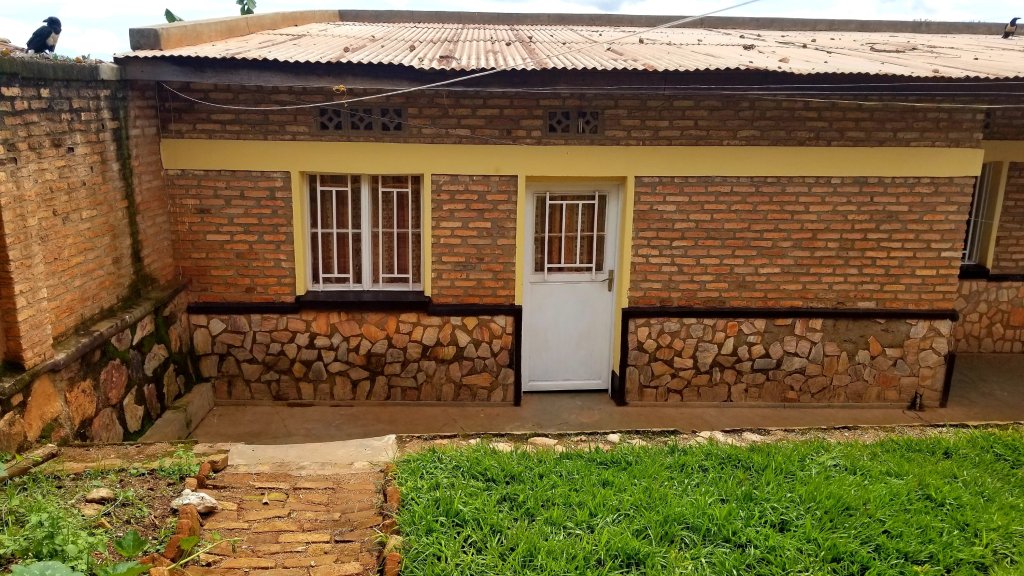
You’ll see this beautiful view when you walk through the gates of my compound. This is the front of my house! It’s a cute and small space in the corner of the compound. I have two other families in the compound, which makes it feel very safe!
Unlike other health volunteers, I don’t live on the Health Center property. I live ~500 feet down the road from the Health Center in a compound with two other families. My house feels very safe and I actually share a wall with the lab tech and her family! Peace Corps is very strict about where they house volunteers since safety is very important (I know my parents very relieved to hear this).
There is a lot of variation in the types of houses for us in Rwanda. Some homes are quite large, with multiple spacious rooms, while others are quite small. Since my site is very urban, I have an appropriately sized house. It’s small, maybe 500 ft^2. It’s the size of a perfect square, divided in half into two rooms – one is the living room and kitchen (photo below) and the other is my bedroom. I also have a small indoor bathroom, which is very lucky. I currently don’t have running water, but I have electricity in one room (sometimes).
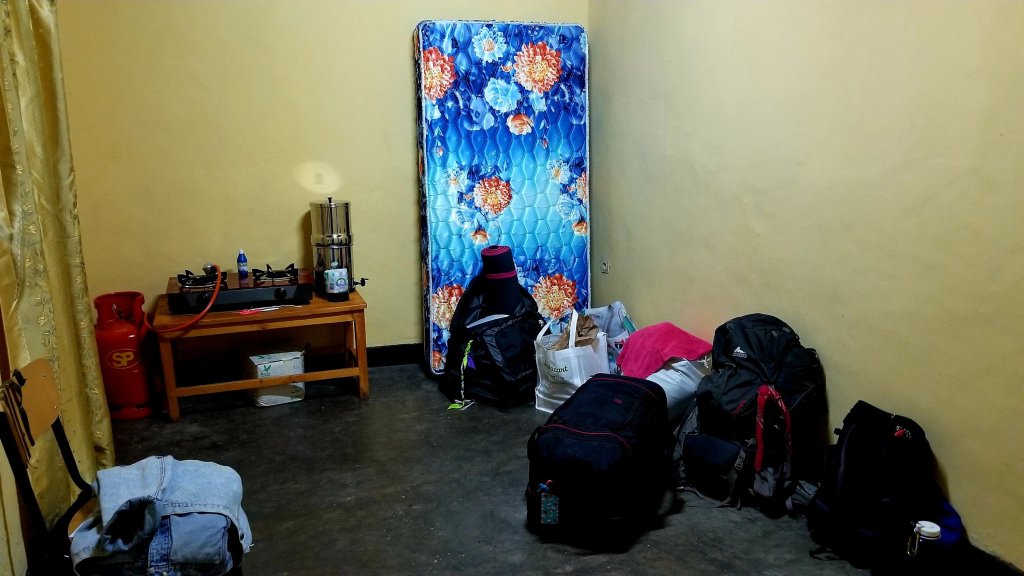
I took this photo the first day I moved in. In this photo, going from left to right, is a table and chair my HC lent me, a gas stove, water filter, my mattress and all of my stuff – clothes, gear, food etc.
The photo above shows the saddest state my house has been in. It was so bare, but now I have a carpet, another table, and a bed frame. For nearly a month I did everything on the floor – slept, ate, cooked. It has been a slow and steady process. On Christmas Eve, my bed frame came and today I got another table and a shelf to put all my clothes on. I’ll be sure to send a housing update once things become more complete. In all honesty, I’m just happy to have furniture! More and more things are moving off the floor!!
Time is a strange thing. It’s been only 14 days at site, but it feels like it’s been both forever and only a few days.
I will say, however, I feel like I’m slowly becoming more accustomed and adjusted to life here, despite my multiple “power crying” sessions and breakdowns. Between site installation and now, I thought about going home, convincing myself that I signed up to do something that I wasn’t capable of. I seriously thought about it, but I have stubbornness issues so it’ll have to take a lot more than just feeling uncomfortable for me to go home. On the bright side, things could only go up, and up they have gone.
I talked to a carpenter earlier last week about getting a couch, tables, shelves, and a bed frame made! Not having furniture and essentially living on the floor is incredibly humbling. I’m over exaggerating, the health center is letting me borrow one chair while I wait for furniture, but I have to move it from room to room if I want to sit! I’m absolutely looking forward to the day when I can come “home” and it feels like home. Little by little, I’m getting the things that make a home – plates, a carpet, a broom – and getting more comfortable exploring my local market where I can get fruits, vegetables, toilet paper (we all need it), and everything in between. The best part is that the mammas at the market are always so happy to see me! It honestly makes my day when my mammas ask me how I’m doing or throw in an extra mango when I buy produce from them. It’s in these small, seemingly insignificant, relationships where I find the most encouragement to continue being here.
I definitely had to put myself in uncomfortable situations, such as going to the market alone, to become more comfortable where I am. Nothing here will “just happen,” you have to make it happen. I know that sounds cliche and overused, but it’s a cliche for a reason. I truly think I’ve made it this far, even though it’s only been 14 days, because of my friends, my co-workers, and my mammas that continue to make this feel more “do-able” and less overwhelming.
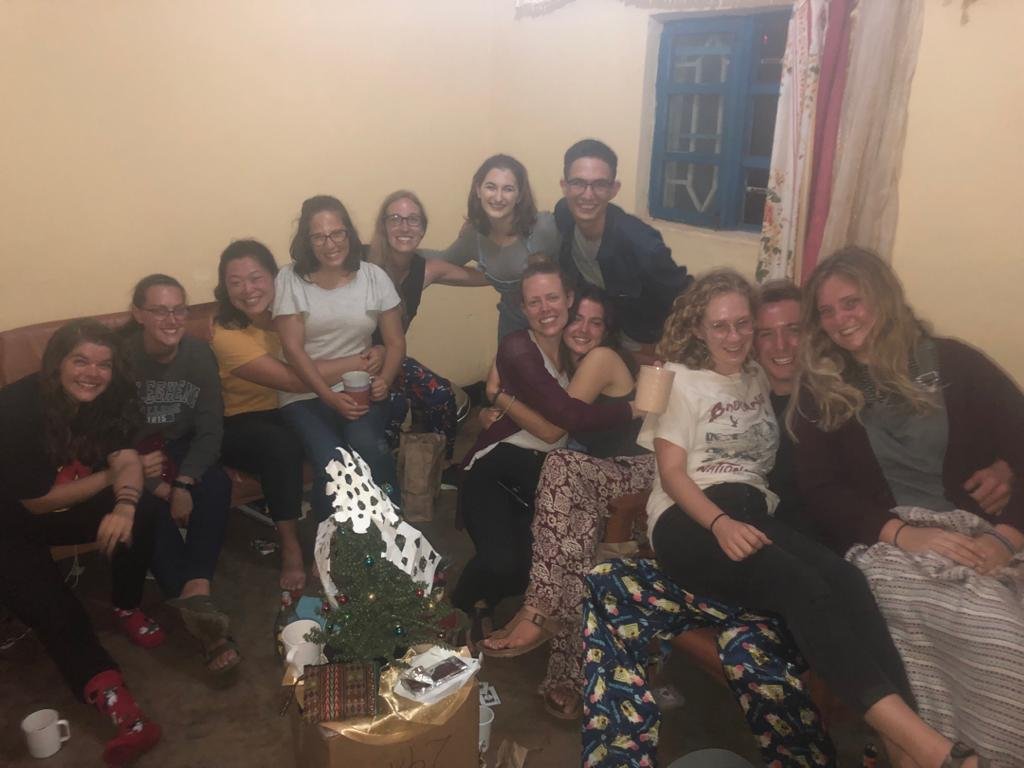
Everything is getting better, it’s a Christmas miracle! I’m half joking, but my friends and I got together to celebrate the holidays and it was so nice to hear that everyone is facing similar challenges – loneliness, unfurnished homes, and feeling overwhelmed, to name a few.
Also, be sure to check out my Rose. Bud. Thorn. page for check-ins!
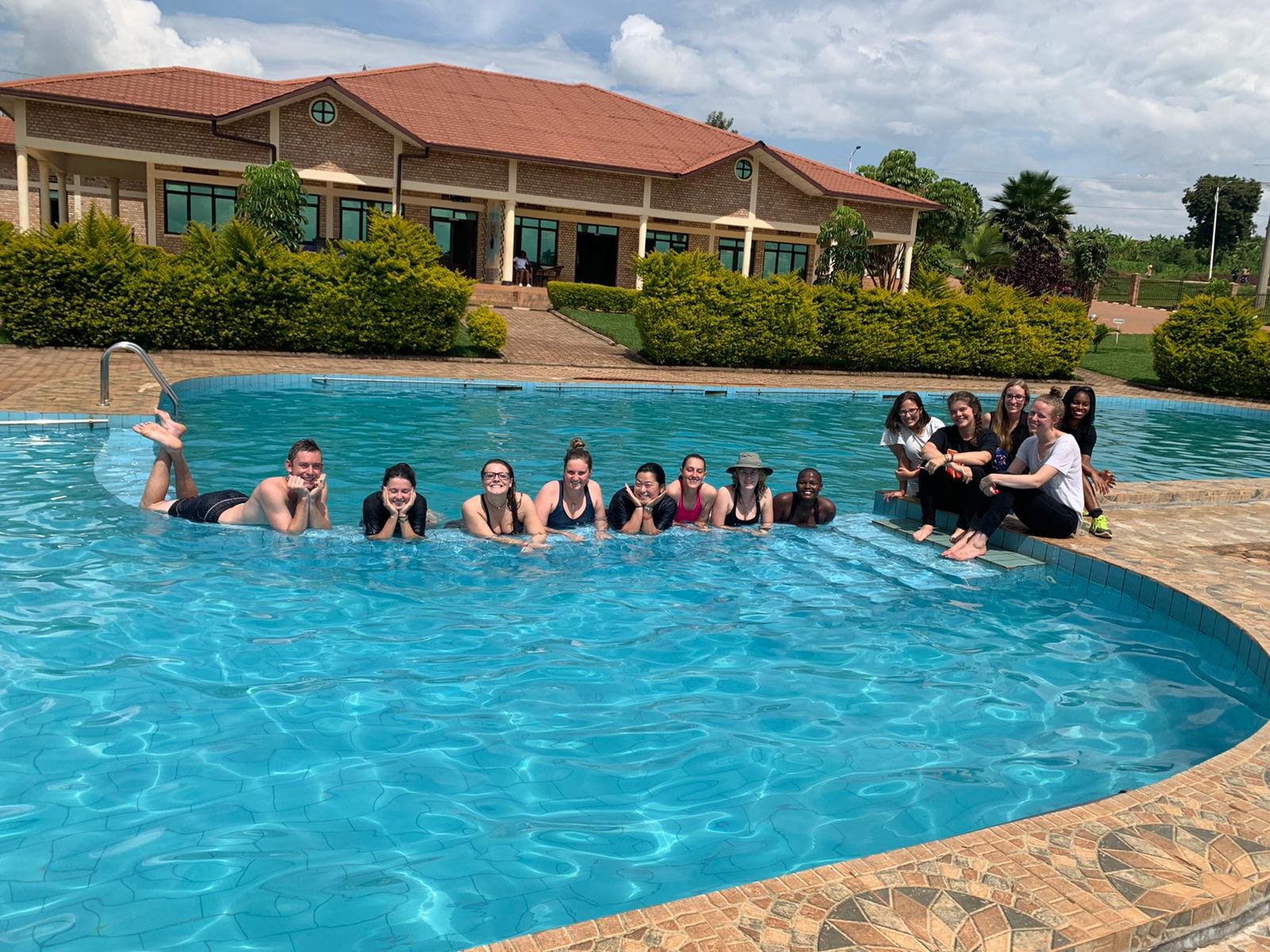
We celebrated our very hot and sunny X-mas poolside! Our X-mas group! Our friend hosted since 1) she inherited furniture from a previous volunteer while a chunk of us are still living on the floor, 2) she has a bigger house, and 3) her mom sent here a small Christmas Tree!
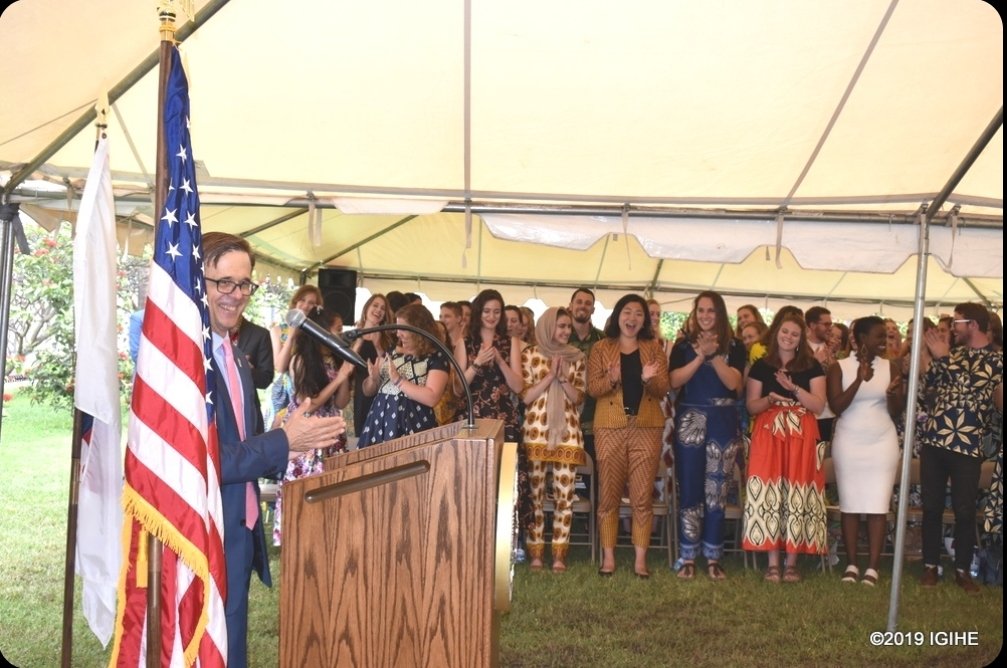
The Ambassador is on the left and all of us are cheering because we just finished our oath and became official Peace Corps Volunteers.
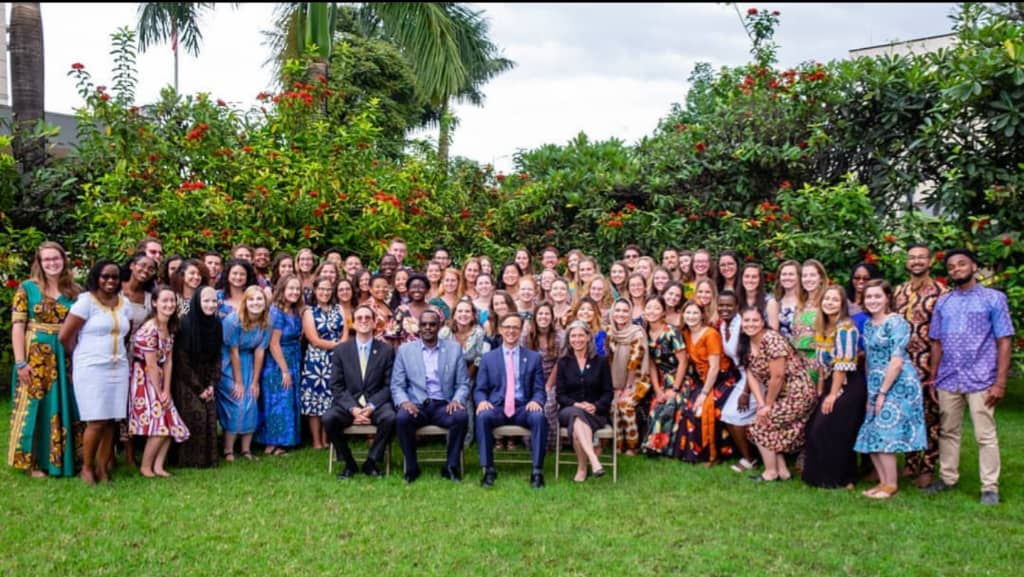
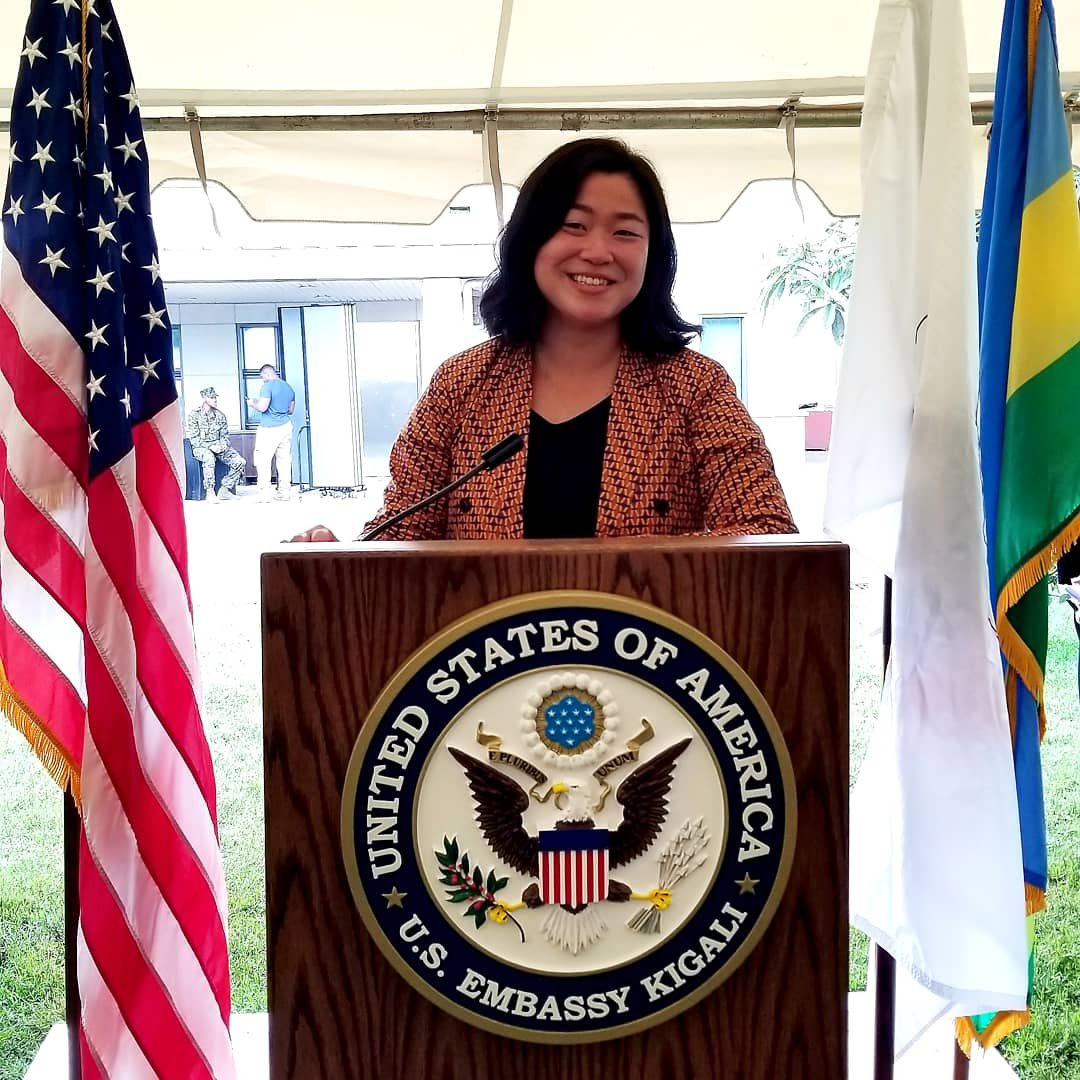
Just like that, Pre-Service Training (PST) is over and we’re all officially Peace Corps Volunteers! On Tuesday we swore-in and took our oaths at the US Embassy in Kigali. We were joined by our supervisors, the Ambassador, the Country Director, and Peace Corps Staff. It was a huge celebration that concluded our training and initiated our service. It’s the end of the beginning.
I think my favorite part was seeing everyone’s outfits we made for the special event. It’s very common for people to pick fabrics from the market and bring them to a tailor with a specific design in mind, making the outfit a complete reflection of the individual. I chose to wear a “power suit” for the event and, oh man, I felt powerful.
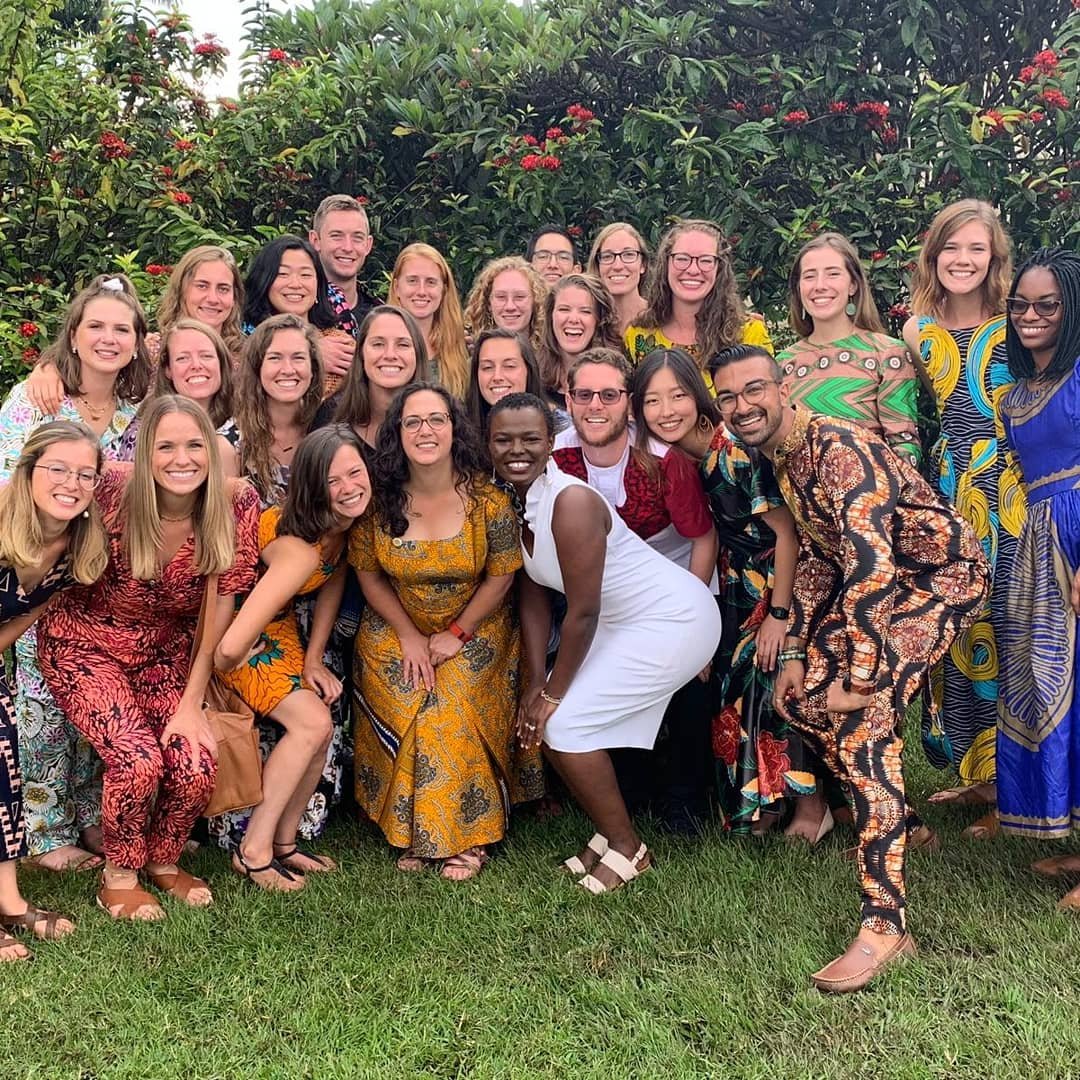
Podim pose.Our Health 11 group photo! I’m one of the taller ones, so find me in the back row.
The entire day was bitter sweet. It’s hard to believe that our three months of training went by so quickly and the following morning we all left to our sites. For most of us, this was our last time seeing each other for the next three to six months. As I’m writing this entry, I’m sitting alone at my site. I was installed a few days ago and it feels like night and day compared to PST.
This entire moment of discomfort is meant to be just that, a moment. I don’t know how or when, but one day I’ll be ready to fully embrace my new life here, even if I’m resisting it now.
During PST I was constantly surrounded by 70 volunteers, our teachers, PC staff, my host family, and I rarely had any free time to myself. However at site, it’s just me, I’m all alone, and I have too much time. The closest volunteers are either a 1.5 hour walk or a 50 minute walk and a 30 minute bus ride away. I feel alone and unprepared. I don’t have any furniture, my mattress is on the floor, and I eat on the ground out of my sauce pan because I don’t have any plates. I wish moving into a new place was as easy at it is in the States where I could go to a Costco, Target, or CVS to get food and the necessities, but my old life doesn’t fit me anymore. This entire moment of discomfort is meant to be just that, a moment. I don’t know how or when, but one day I’ll be ready to fully embrace my new life here, even if I’m resisting it now.
When I decided to make a blog about my experience as a Peace Corps Volunteer, I made a promise to myself and to anyone reading to show all the good parts and the bad parts. I don’t want social media to show a warped version of my experience where it’s only ups and highs and no downs and lows. I want to be real, raw, and vulnerable with you.
 Rwandering around with Joanna