Here’s a funny story about my name and how I got my Rwandan one.
This happened a few months ago, but I think it’s a funny story worth sharing.
In Rwandan culture, it’s common for people to refer to you by your last name. A lot of the Rwandan teachers and PC staff often called me Kim or Kim Jo. When I first met my host brother, who was home briefly from Medical School, we had a fun conversation that went like this:
Me: Hey, I’m Joanna Kim, but a lot of people call me Jo.
Him: Hey! Ah, Kim, you must be Korean. The home of Samsung.
Me: Yes, wow, how did you know? (I was so impressed!)
Him: A lot of people from Korea have that last name. Hm, Kim, Kim Jo. Kim Jo. Hey, do you know Kim Jung Un?
Me: …
Him: I like his haircut.
Funny, right?! I’ve never had a conversation like that before, especially since nobody has ever compared our names like that. I hope it brings a smile to your face as it did to mine. It happened months ago and I still laugh about it!
On the topic of names, my host mother gave me a Rwandan name. Peace Corps recommended our host families to give us Rwandan names, especially if our American ones are difficult to pronounce, to help us integrate. On my second day with my host family, my host mom said that she would call me Keza (keh-zah). Names are an important part of Rwandan culture, there’s even a traditional naming ceremony for newborns where people offer names that reflect them or have a significant meaning behind the name. So, I asked my host mom, “what does Keza mean?” She said, “beautiful.”
I was embarrassed when she told me that. I never thought of myself as beautiful or ever being called that. Hopefully, I’ll grow into it.
I spent this past week at my site in the Southern Province! I got to see my Health Center (HC), meet all of the staff, and see where I’ll be living. The main purpose of doing site visit is to become familiarized with where we’ll be working and living before we move in after we offically swear in as Peace Corps Volunteers (PCV). It’s important that we know when and where the markets are, what we can buy there, how to get to and from our site and Kigali, and see our homes so we know what we’ll need to buy to furnish it.
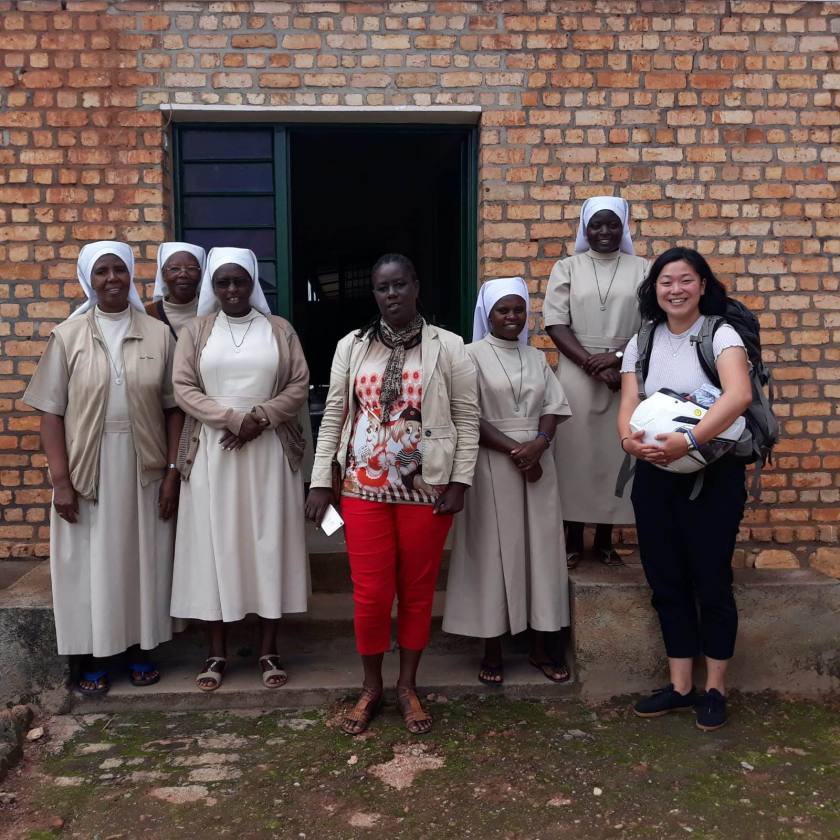
In all honesty, had my first (and definitely not last) moment of “oh my god, I don’t think I can do this.” It was a rude awakening realizing how insufficient my Kinyarwanda is. I had a difficult time communicating with my Supervisor, Sister Athanasie, the HC staff, the mamma’s and their babies. I was overwhelmed knowing that this is where I’ll be working for the next two years and that I’ll have to lead educational sessions on nutrition, hygiene, and other health topics.
Fun and fast facts.
My HC was established before the genocide, making it one of the oldest in the country.
It’s affiliated with the Catholic Church, so my supervisor is a Nun – Sister Athanasie.
My HC serves 17 villages.
Location. Location. Location.
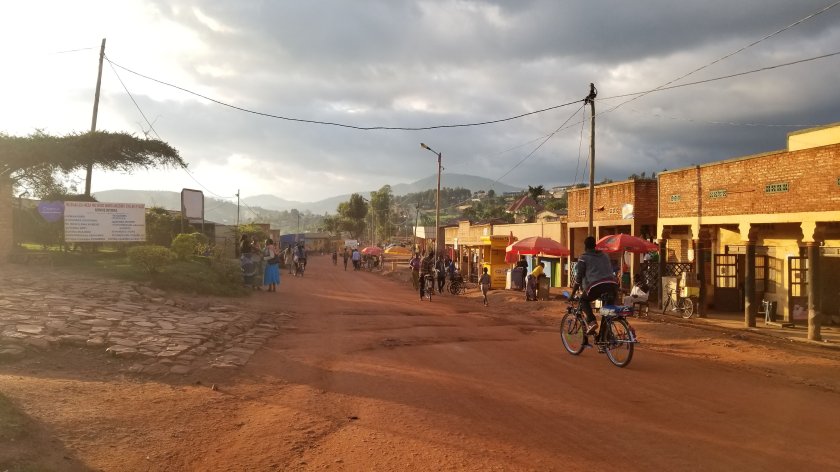
I’m only a mile away from one of the bigger cities in the Southern Province, which means restaurants, a good market, stores, etc. At first I was a little bummed that I was in such an urban area, in fact, the volunteer I’m replacing says that my site is probably the closest one to a major city. After thinking about it, I’m quite relieved because it’ll make life a lot easier when I need to furnish my house, go grocery shopping, or want to get some Chinese food and ice cream (YES! There’s a Chinese Restaurant and an ice cream shop in town). I’m definitely excited to host my friends when they visit.
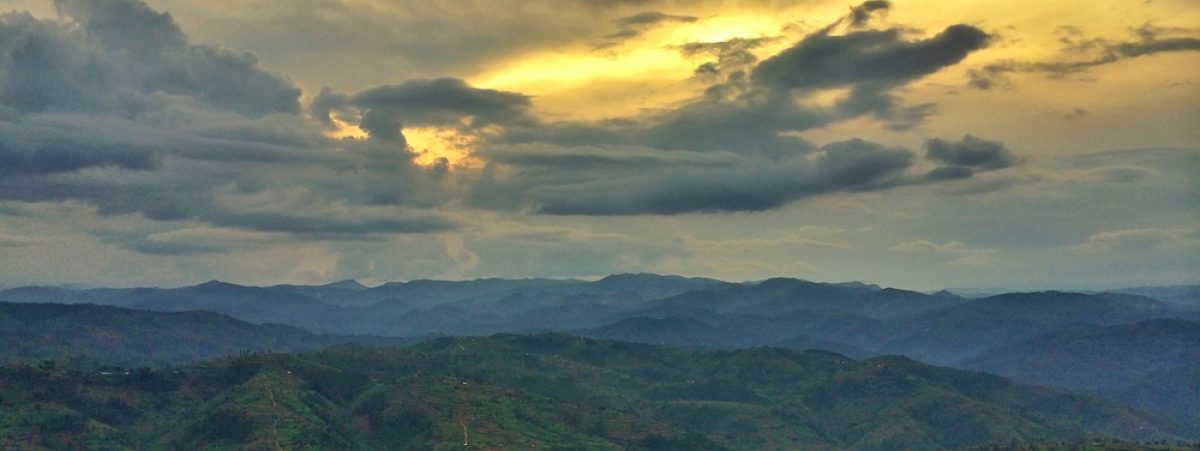
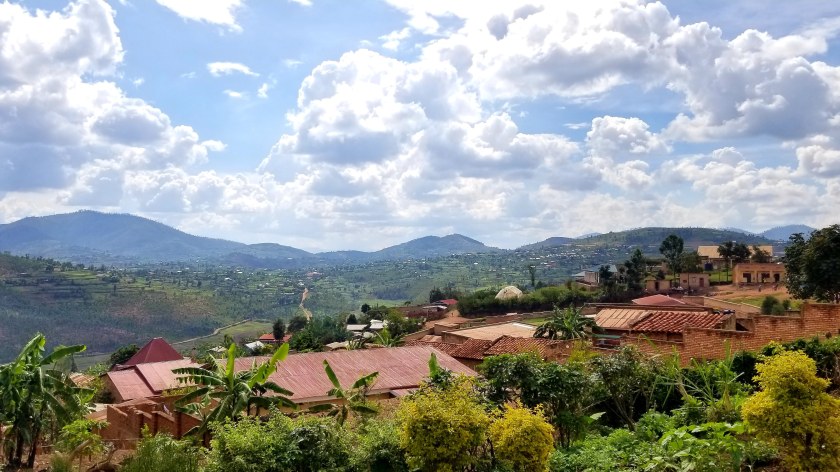
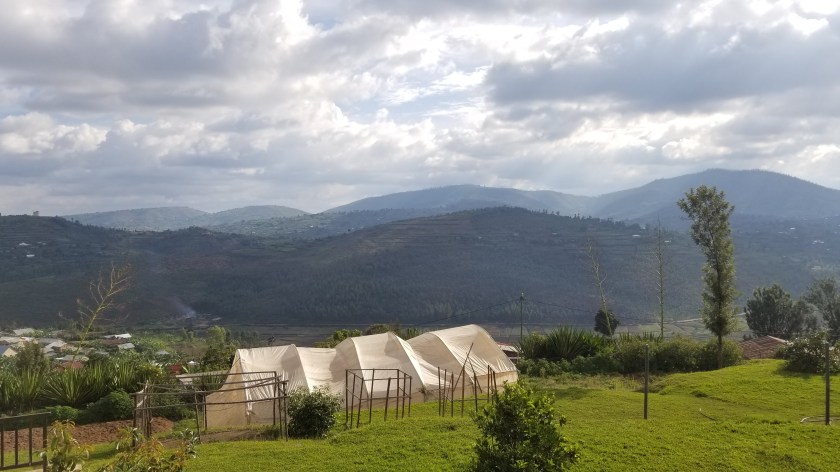
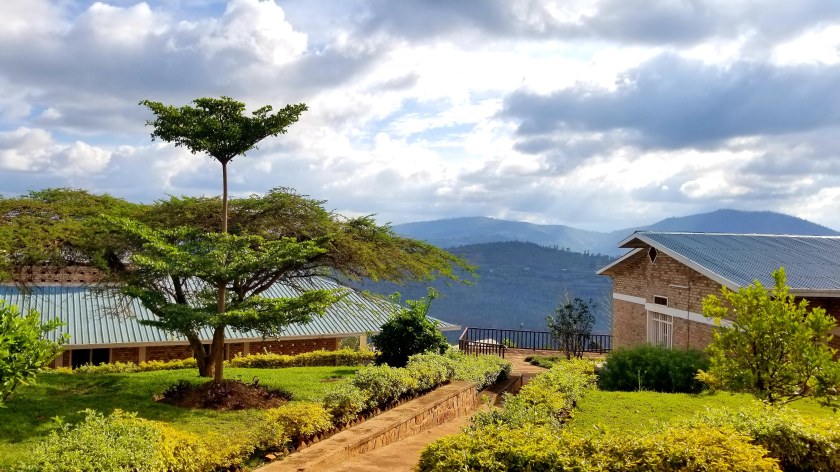
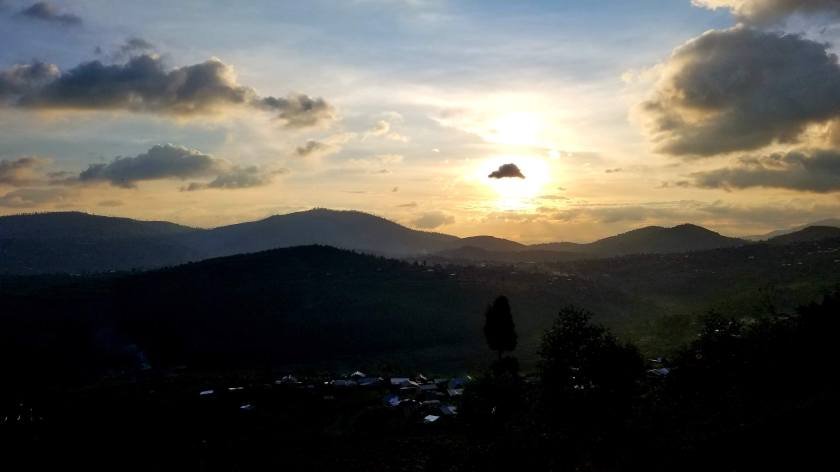
Here are some pictures from my site. Enjoy!
My HC is in the photo – can you spot our green house? Our greenhouse. The building on the left is our maternity ward and the right is the laboratory. Beautiful, right? The entrance to the HC is on the left and the village center/downtown is on the right.
My House.
The Peace Corps (PC) and the HC work together to find housing for all of the volunteers. PC’s biggest concern is safety for all us, especially since I’m a woman living alone. They got a house that’s 200 meters away from the HC, is in a compound, and has an indoor bathroom (!!!!). Most homes in Rwanda have latrines, but they can unsafe to use at night so many Rwandans don’t even use them at night. I know my mom was very happy to hear all of this. Houses can vary dramatically across the country – some are very large, some are quite small, some have running water and electricity while others don’t. Mine is roughly the size of a hotel room (~300 square feet), has running water, and electricity. No complaints.
Work.
I spent my week working at my HC, getting a small introduction to my two years working there. The HC has a lot of different services/ departments: HIV/AIDS counseling, TB, immunizations, maternity ward, counseling, dentistry, primary care, laboratory testing, and of course maternal and childhood health services, such as nutrition, ante and postnatal care.
Our Pre-Service Training (PST) has familiarized us with what to expect when working at the HC, but nothing can prepare you for seeing your first acutely malnourished child.
My counterpart, Cecile, is the nutritionist and was teaching me all about the services they offer moms and their children: the milk program, Fortified Blended Foods (FBF), immunizations, growth measurement, counseling sessions and so much more. We spent our week together taking weight, hight, and Mid-Upper Arm Circumference (MUAC) measurements, distributing milk and FBF to expecting mothers and mothers with young children. Our Pre-Service Training (PST) has familiarized us with what to expect when working at the HC, but nothing can prepare you for seeing your first acutely-malnourished child. It’s often not a problem of getting enough food on the table, but having the right foods. When I flipped through the charts, I was stunned to see how many children were marked as “DIED” before their 2nd birthday.
Rwanda has four national languages – French, Swahili, Kinyarwanda, and English – however, President Paul Kagame speculates that Kinyarwanda will become extinct in 10 years because it’s only spoken in Rwanda and has little use anywhere else.
It’s officially one month since arriving in Rwanda and it has flown by because everyday has been busy with Pre-Service Training (PST). Before we’re officially sworn in as Peace Corps Volunteers, we go through a rigorous three month training session where we’re learning how to be volunteers. Everyday from 7:45a – 5p is packed with Kinyarwanda language lessons, cultural lessons, technical training, medical sessions and so much more.
We have language class with 3-5 other volunteers every morning, six days per week, roughly estimating to twelve hours of language every week. Once PST is over in early December, we’re off to our sites for the next two years and our language lessons cease. The goal is to be mid-intermediate by then so we can navigate our sites on our own. Learning Kinyarwanda is incredibly rigorous because they’re expecting a high level of fluency within three months. When was the last time you had to become mid-intermediate in a completely new language in three months? It’s also difficult because there aren’t many online resources to learn it, neither Google Translate nor Duolingo has it.
Rwanda has four national languages – French, Swahili, Kinyarwanda, and English – however, President Paul Kagame speculates that Kinyarwanda will become extinct in 10 years because it’s only spoken in Rwanda and has little use anywhere else. Wrap your head around that. We’re learning a language that could become extinct – beautifully tragic, isn’t it?
The rest of the day we’re learning how to be health educators. We’ve had a refresher on how the Rwandan government wants to address the first 1,000 days to reduce maternal and infant mortality rates. We’ve learned about the public health system, medical insurance, and how to distinguish between malnourishment and stunting. As such, we’ve also learned how the Rwandan government is tackling those problems through growth/weight data collection, family planning, health, hygiene and nutritional education. We’ve visited a few regional health centers to get familiarized with how they’re organized since we’ll be working with our site’s health centers in our service.
Speaking of which, we’ll be visiting our sites this week. It’s only from 10.19-10.25 to meet our supervisors, health center staff, and to see where I’ll be living for the next two years. Exciting!! In addition to meeting my community, I’m super amped to meet the other volunteers in the Southern Province. My cohort is Health 11, while the volunteers who are currently there are from Health 10 and Education 9/10. They’re going to show us around the region – markets, stores, where to get “x, y, and z.” By the time we get back from our site visit, we’ll be halfway through PST and just in time for Halloween ~~
 Rwandering around with Joanna